Common Ground: Heather Knight On the Community-Based Approach to Conservation in the North Fork of the Poudre River
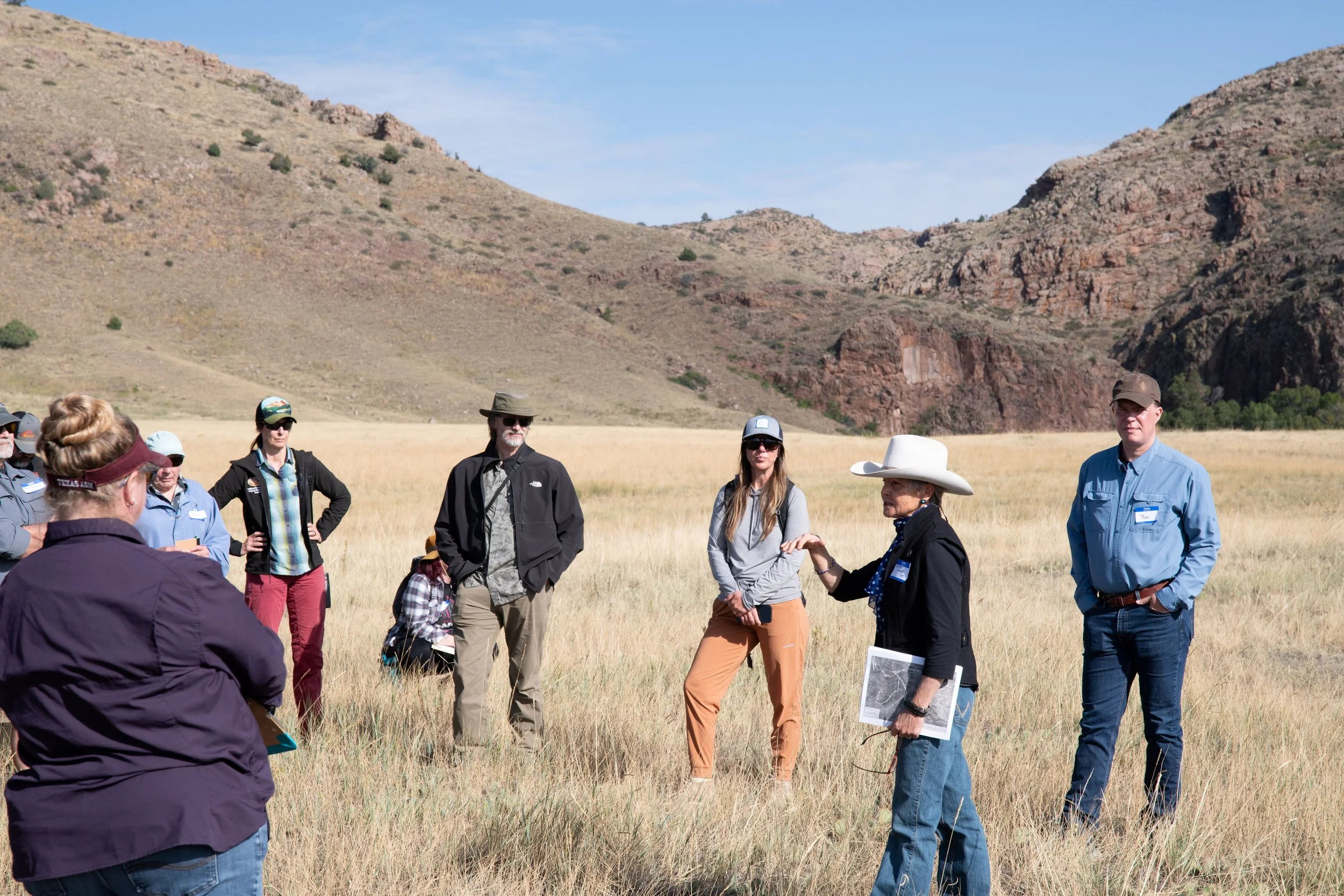
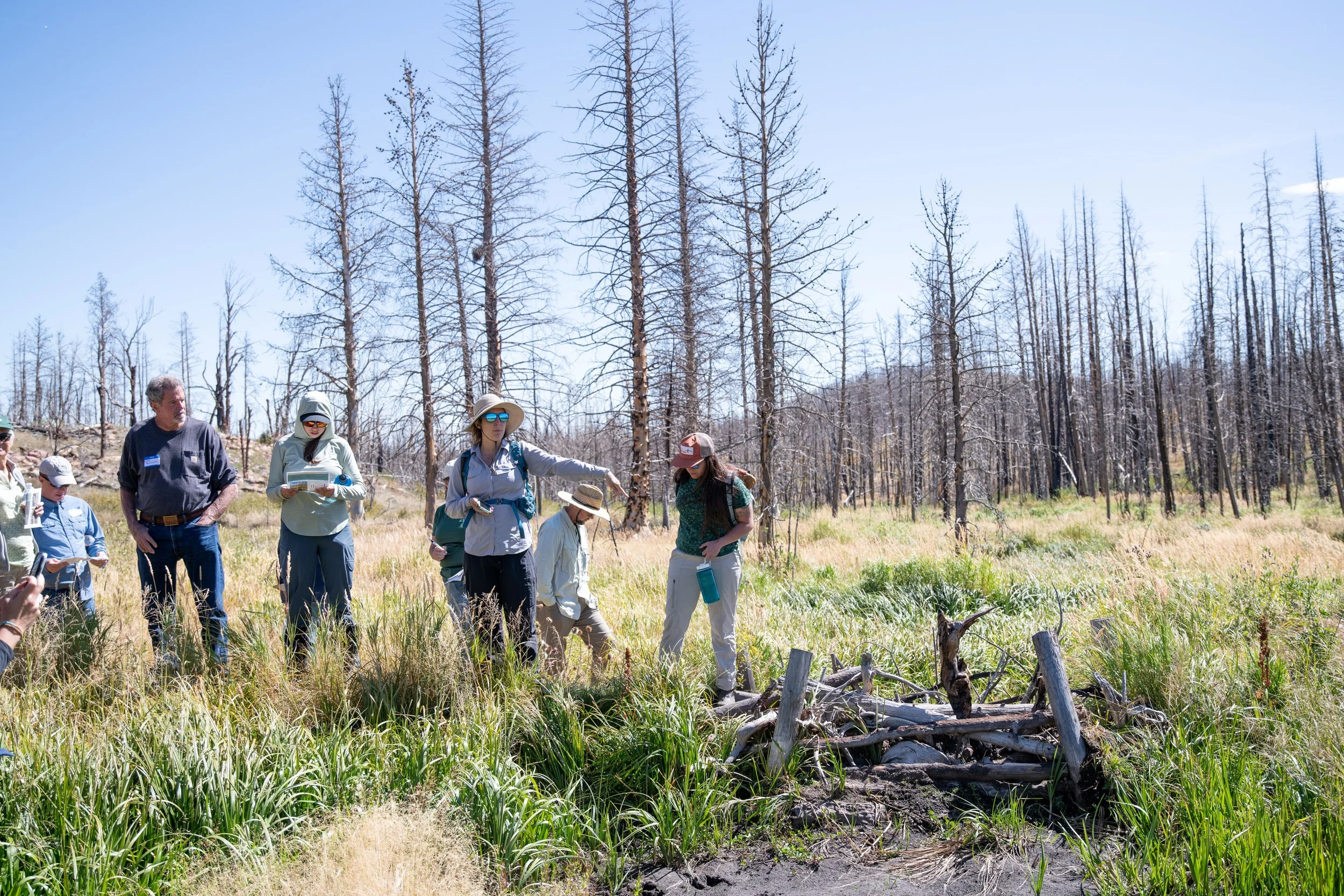
Heather Knight leads a group of community members and partners on a tour of restoration projects in the North Fork of the Cache la Poudre River Watershed. (Photo by Cory Dick)
by Helen Taylor, Freelance Writer
In the early 1990s, The Nature Conservancy (TNC) changed its conservation model. What had been a land and resource-based practice of protecting small, important preserves, mainly in the eastern U.S., became a more collaborative process that engaged local communities. While efforts to preserve critical ecosystems endured, TNC broadened the conversation to include “people of place” – those whose livelihoods and wellbeing were most affected by its conservation decisions.
It was a fortuitous shift for Heather Knight. Around the same time, Knight emigrated to the U.S. from Australia to marry Rick Knight, a professor of wildlife conservation at Colorado State University. When she arrived, she took a volunteer position with TNC. She had an undergraduate degree in ecology and natural resources management, a graduate degree in education, and a master’s degree focused on human impacts on wildlife. Her studies, as well as a seven-year stint as a public schoolteacher and work in the tourism industry, had honed a keen desire to help people experience natural places more deeply and conscientiously. Just as TNC was working more closely with communities to understand what they cared about and how to protect it, Knight had been puzzling over the same questions.
“Natural resource sciences have traditionally been focused on the critter, the soil and the water,” says Knight. “It wasn’t until around this time in the 1990s that people started thinking about the human side of conservation.
“What we wanted to understand was how to work with people of differing perspectives to manage these resources in a way that works for everyone,” she adds. “Whether you’re someone enjoying a beer in Fort Collins knowing that the watershed upstream makes that possible, or you enjoy birdwatching, flyfishing or hunting, or you’re producing food in a sustainable way, it’s figuring out how we care for these places together.”
A unique conservation opportunity
Not only was the timing of Knight’s arrival in the U.S. serendipitous, the place where she landed, in Larimer County, was also significant. The Nature Conservancy hired Knight to expand conservation efforts at Phantom Canyon Preserve to encompass the entire North Fork of the Cache la Poudre River and its watershed. Known as the Laramie Foothills, the area is a contiguous landscape Knight describes in rhapsodic terms: “From I-25, if you’re a raven flying west, you’d see this rolling prairie with red sandstone hogbacks covered in limestone like caramel topping. You’d see springs and seeps and streams, and then, as you crossed Highway 287, you’d see a sudden change, as you moved from the sedimentary landscape to rolling grasslands that took you into the foothills of the Rockies. The terrain would get rougher and steeper as you moved higher, through the punctuated foothills shrublands, up into the dense forested ecosystems, finally rising above timberline to the Continental Divide.”
This geography is what the Front Range of Colorado used to look like from north of Castle Rock to the Wyoming border. Now, she says, it’s the one of the last places where there’s an opportunity to connect large swaths of public and private land to create an unbroken corridor literally stretching from the mountains to the plains.
The 400,000-acre North Fork watershed includes about 110,000 acres of state and federal public land. Of the remainder, about 130,000 acres of private land have been conserved under permanent easements or purchased as municipal-owned open space.
For more than three decades, Knight has been privileged to work with a diverse group of individuals and organizations in the collaborative efforts that have secured these working lands for the future. As a lead facilitator for the Laramie Foothills Advisory Group, she’s worked with the owners of large ranches and small parcels; local, state and federal land management agencies; conservation-focused NGOs; and businesspeople to build a coalition.
“We convened around the questions of what’s special about this place? Why should we care about it? What are the things that threaten it? And what can we do together to protect this landscape?” she says. “We had different priorities, but we had a shared vision. We’d identify a project and the members best suited to work on it and then find ways to leverage our resources to get it done.”
The mouse that roared
By 1998, members of the Laramie Foothills Advisory Group had worked with private landowners to conserve thousands of acres in the watershed. Things were going well. And then came the listing; the diminutive Preble’s Meadow Jumping Mouse (PMJM) received federal designation as the first threatened mammal in Colorado.
“It wasn’t a bear, or a raptor, or a big, glamorous cat,” says Knight. “It was a mouse – actually, a subspecies of mouse. And it nearly broke up our collaborative.”
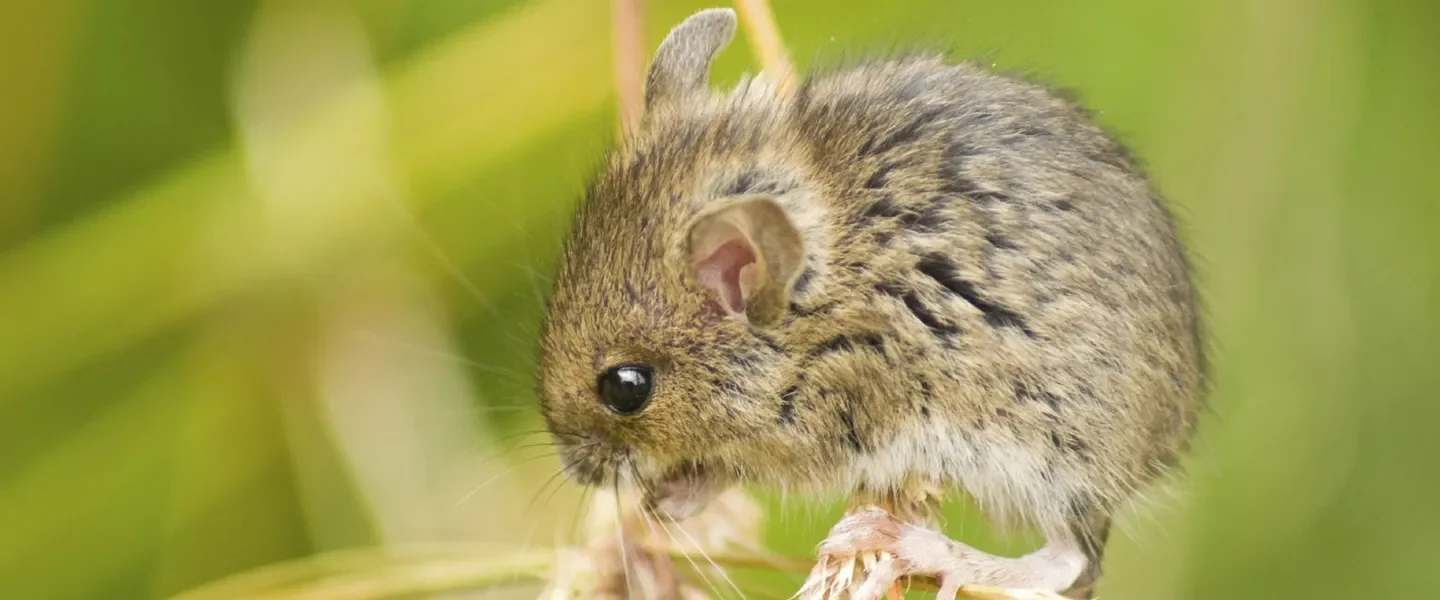
The Preble’s Meadow Jumping Mouse (PMJM) received federal designation as the first threatened mammal in Colorado.
While there was now an impressive slate of conservation wins, conservation easements – a relatively new tool in the West – were still controversial. Skeptics and conspiracy theorists were already wary of government overreach. Issues around property rights were a hot topic. And developers were snapping up farmland to accommodate city-dwellers looking to decamp to the country.
Knight says emotions were already running high, and the listing was like a stab in the heart to those who’d been working so hard to nurture a culture of collaborative conservation. “Here’s a federal agency coming in and telling landowners what they have to do,” says Knight. “So, our solution was to take on the conservation plan ourselves – writing it from the bottom up, rather than having it delivered from the top down.”
It took seven years. The group had the foresight to stipulate that the plan wouldn’t be initiated until the first landowner signed on. This allowed the Advisory Group to continue its conservation work as usual while the U.S. Fish and Wildlife Service (USFWS) crafted a recovery plan.
Twenty years later – yes, 20 – the USFWS finalized the PMJM Recovery Plan. “I got a call from my neighbor George Seidel, who’d worked on our conservation plan,” Knight recalls. “He said the USFWS wanted to take a new, community-based approach to the Preble’s recovery effort.”
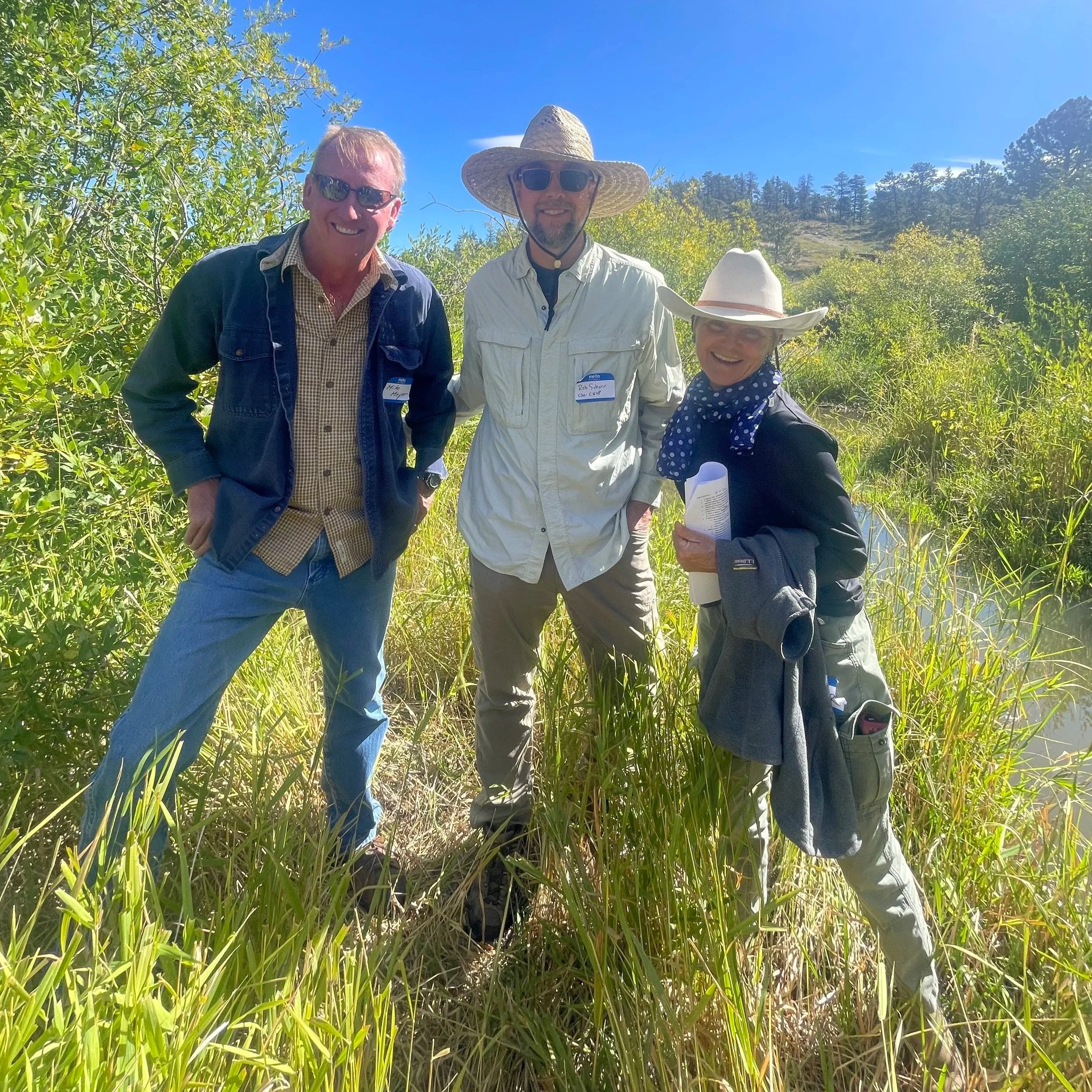
Heather Knight with Mike Meyer and Rob Schorr, members of the Nork Fork Poudre Site Conservation Team. (Photo by Megan Maiolo-Heath)
Knight was suspicious and frankly exhausted by all the strife but felt compelled to partner with her friend and long-time conservation ally. Leaning into the new model of local Site Recovery Teams (SCTs), USFWS Ecological Services asked the North Fork watershed group to be the SCT pilot.
“It was a bit of a miracle,” says Knight. “We already had a 30-year history of collaborative conservation. We’d weathered a lot of stuff and accomplished a lot. We had a group already committed to conservation, a lot of partnerships already in place, and a lot of good habitat. And here they were proposing a community-based approach.”
In 2019, the North Fork Poudre SCT began to design a process and test it by doing the recovery work. In short, that meant identifying all Preble’s habitat in the watershed, ranking it as good, medium or lesser quality, and taking steps to maintain good habitat or make improvements where possible. The Preble’s Meadow Jumping Mouse is partial to riparian areas – narrow strips of vegetation along riverbanks, where food and cover are ample. In the North Fork, much of that habitat is on private land.
“We have to be very careful about how we tell this story,” says Knight. “We’ve tried to make it as transparent and inclusive as possible and make sure the people sharing the message know this place and are part of this community.”
The story that’s emerged and largely galvanized the region isn’t about the heavy hand of the government coming down in defense of an elusive mouse. It’s about maintaining a healthy watershed for humans and nature alike. The PMJM is a good indicator of that watershed health; if the mouse is doing well, then other things, like elk, trout and songbirds, are also doing well.
“Everything flows into our waterways, and the Preble’s mouse is nicely tied to those waterway systems,” says Knight. “If we can spread that message while remaining respectful and sensitive to different values; if we can set a positive tone, reward good stewardship and encourage participation, we’re showing that over time the collaborative approach works, even in challenging situations.”
Right time, right place, right team
Projects to improve habitat and restore landscapes and waterways require specialized teams. The 22-member North Fork Poudre SCT includes four private landowners, four NGOs, five local municipalities, three federal agencies, five state natural resource agencies and one for-profit conservation entity.
A regional mitigation bank helps landowners cover PMJM habitat restoration costs by generating credits (similar to carbon credits) that developers can purchase to offset the environmental impacts of their projects. And groups already in place doing restoration work are invaluable. Knight points to the Coalition for the Poudre River Watershed (CPRW) as a perfect example.
“CPRW plays a huge role in the effort to understand the overall health of the watershed,” she says. “Not only for post-wildfire recovery but in anticipation of future management of those systems.
“Their work dovetails beautifully with the SCT’s because post-fire runoff flows down to Preble’s habitat and has an impact,” Knight adds. “Ideally, in a watershed, we work from the top down, but we don’t always have that luxury. So, a group like CPRW, with the knowledge to help prioritize projects and the partnerships to bring resources to them, is key.”
CPRW staff co-host a visit to one of their post-fire stream restoration projects on Elkhorn Creek in the North Fork of the Cache la Poudre River Watershed as part of the SCT’s annual Healthy Watershed Tour (Photo by Cory Dick).
CPRW has focused on collaboration since its inception. “They know how essential it is to take away risk by providing information and resources and demonstrating solutions so people can see that they work,” says Knight. “They’re on the ground constructively listening and engaging people.”
That, she says, keeps her optimistic. “These next-gen folks understand the human side of natural resource management – something we should have considered all along. I’m amazed by their talent and dedication, and I have a lot of hope for the future because they get how to work with people with different perspectives.”
More than 30 years ago, Knight had the good fortune to land in a special place and put her interests and talents to use in the effort to conserve it. Now, six years into the PMJM recovery plan, the North Fork Poudre SCT has successfully created a methodology and process other SCTs can implement and engaged a diverse group with high credibility and local expertise to share the message around watershed health. Trap rates for Preble’s are low, she says. But that data itself informs discussions around adding resources to increase trap density or modifying expectations of what recovery looks like.
“Nothing’s ever going to be perfect, and the expectation that everyone will agree and be happy isn’t the right expectation,” she says with characteristic positivity. “It’s about understanding that we all have different values and priorities and then taking a step back to discover what it is we all care about and how can we focus on that and be kind and giving to each other.
“Some of that just takes time,” she adds. “Sometimes you understand it’s about language and individual experience and you can close that gap. We all have the capacity to change. And, if we can find ways to reduce risk and be willing to try new things, the better chance we’ll have to address more complicated challenges few of us thought we’d have any control over. And that’s in our best interest as a society.”
Helen Taylor is a freelance content writer based in Fort Collins, CO.