Poudre River Resources
Feel free to download these helpful watershed resources or share with friends and colleagues.
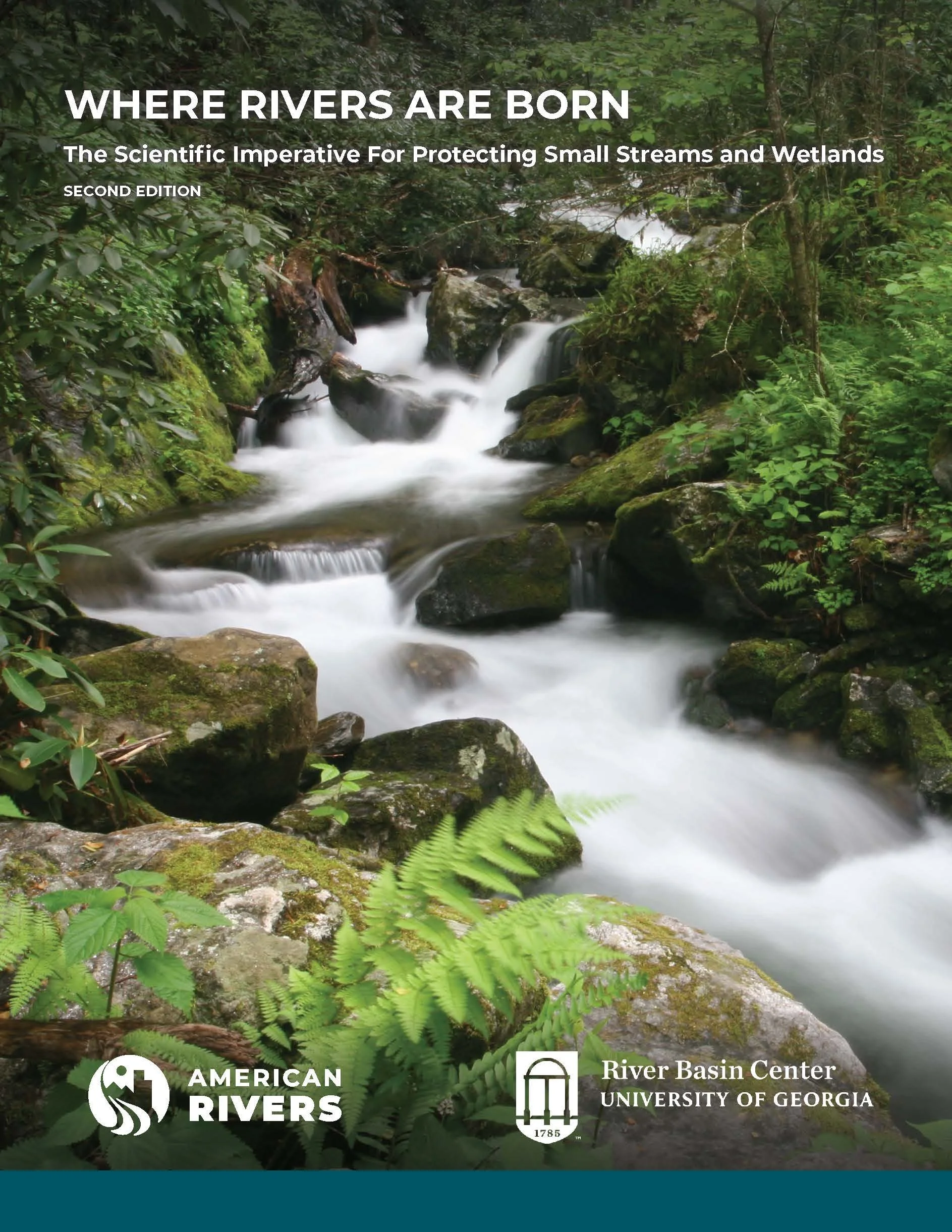
Where Rivers Are Born: The Scientific Imperative For Protecting Small Streams and Wetlands (2nd Edition)
American Rivers & River Basin Center
All of humanity and the entire global economy depend on a daily supply of clean water. Most of that water originates in small streams and wetlands—the headwaters—which are often unnamed and unmapped. Yet these anonymous headwaters are essential for maintaining downstream water quality, preventing flooding, providing wildlife habitat, and improving people’s quality of life. This document summarizes the scientific basis for the value and benefits of small streams and wetlands, which are often unnoticed, unappreciated, and unprotected, and yet are a critical part of the natural infrastructure that sustains humanity. This second edition is an update to the original version, first published in 2003, and draws on hundreds of relevant scientific papers that have been published in the past two decades.

Floodplain Development Permitting for Process-Based Restoration in Colorado
The goal of this guidance document is to help the restoration community provide tangible workflows, expectations, and optionality to navigate PBR projects through the floodplain permitting space.
Specifically, this document:
1. Instructs financially invested parties and project managers on how to determine overlap between a project location and a FEMA floodplain,
2. Defines the different floodplain types and their implication on permitting requirements and processes,
3. Provides cost ranges for the floodplain permitting process depending on the construction technique and floodplain type, and
4. Leverages case studies to standardize hydraulic analyses for PBR projects, streamlining the floodplain permitting process.
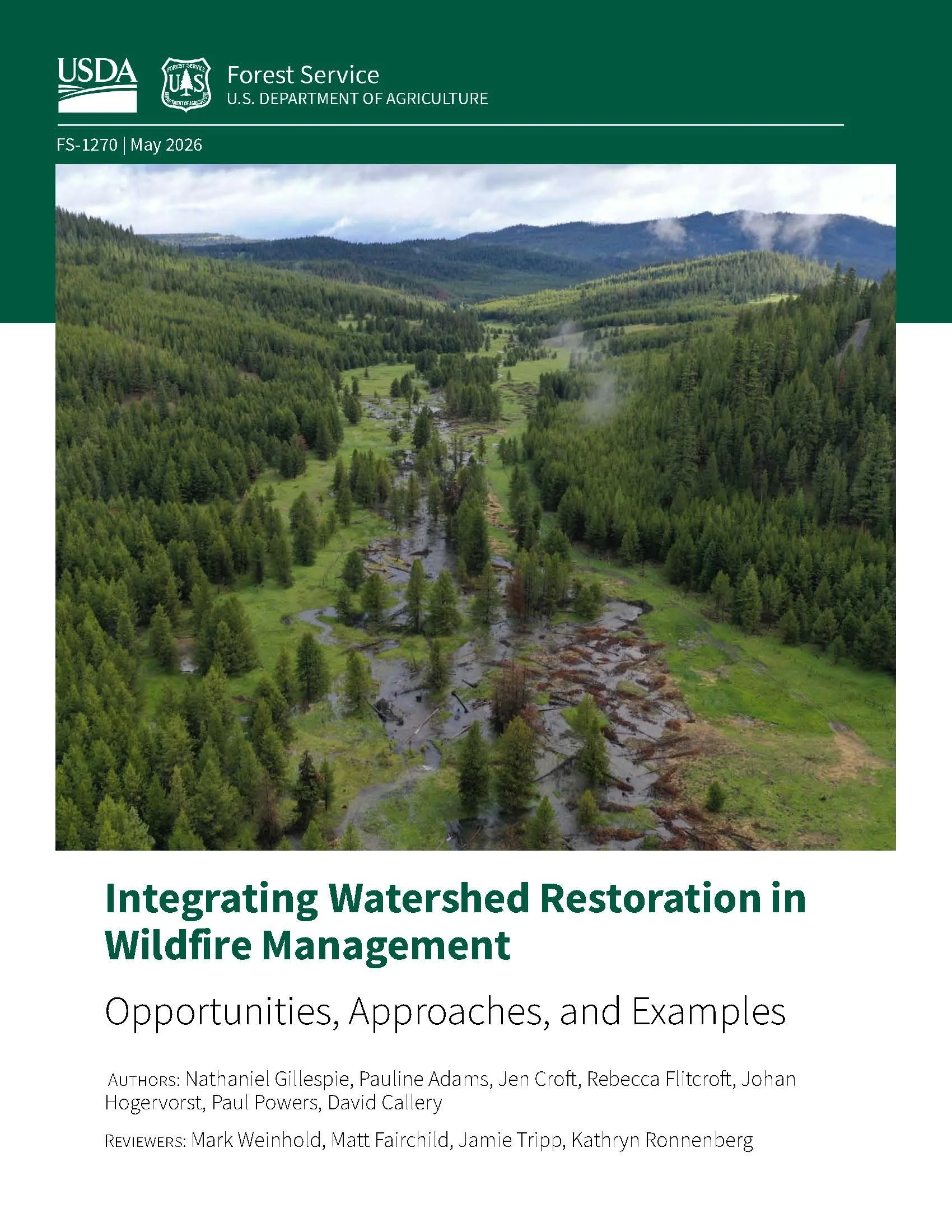
Integrating Watershed Restoration in Wildfire Management
U.S. Forest Service
A new federal report explains how restoring streams, beavers, and wetlands could be one of our most powerful tools for fighting wildfires.
The Forest Service report, Integrating Watershed Restoration in Wildfire Management, makes the case that rewetting degraded stream corridors, meadows, and valley floors isn't just good for nature, it's a fire management strategy. When water tables rise and wetland vegetation returns, those areas become "wet fuel breaks" that wildfires struggle to cross.
The good news: this doesn't always require massive infrastructure. Some of the most effective techniques are surprisingly low-tech.

Forestry Best Management Practices (2023)
Colorado State Forest Service
This guide outlines Best Management Practices (BMPs) to prevent, reduce or mitigate adverse water quality impacts from forest management activities. It should be used during forestry project planning, operation and close out. We hope you find this guidebook to be a beneficial tool.

Poudre River Investigators Guide
The Cache la Poudre River is an integral part of the Northern Colorado landscape, originating in Rocky Mountain National Park, flowing down the mountains, and through the cities of Fort Collins, Timnath, Windsor and Greeley. The Poudre River Investigators activity guide connects youth and families to the river corridor through hands-on, minds-on activities. The guide serves as an outdoor education resource and can be used throughout the river corridor.

Investigadores del Río Poudre
El río Cache la Poudre es una parte integral del paisaje del norte de Colorado, se origina en el Parque Nacional Rocky Mountain, fluye por las montañas y atraviesa las ciudades de Fort Collins, Timnath, Windsor y Greeley. La guía de actividades de Poudre River Investigators conecta a jóvenes y familias con el corredor del río a través de actividades prácticas y mentales. La guía sirve como un recurso de educación al aire libre y se puede utilizar en todo el corredor del río.