New Forest Service Report: "Integrating Watershed Restoration in Wildfire Management"
A new federal report explains how restoring streams, beavers, and wetlands could be one of our most powerful tools for fighting wildfires.
Picture a wildfire ripping through a dry forest. Now picture a marshy stream corridor - full of standing water, mud, and leafy willows - sitting right in its path. The fire slows. It may stop entirely. That's not a lucky accident. It's physics, and a new U.S. Forest Service report says we should be engineering it on purpose.
The problem
Our rivers and meadows got drier - and more dangerous
For generations, humans have drained, ditched, and straightened streams across the American West. Beavers, nature's wetland engineers, were trapped to near extinction. Roads were cut through riparian valleys. Meadows were overgrazed. The result? Landscapes that are dramatically drier than they used to be.
Instead of acting as natural firebreaks, many of these former wetlands are now filled with flammable grasses, shrubs, and conifers. Valleys that once resisted fire now carry it, spreading flames from hillside to hillside like a wick.
Drier valleys: Decades of stream straightening and beaver loss have lowered water tables across the West
New fuel corridors: Former wetlands now carry fire up and down valleys instead of slowing it
Lost habitat: Salmon, elk, sage grouse, and hundreds of other species depend on healthy floodplains
Water at risk: Post-fire ash and sediment can contaminate drinking water for cities miles downstream
The solution
Bring the water back
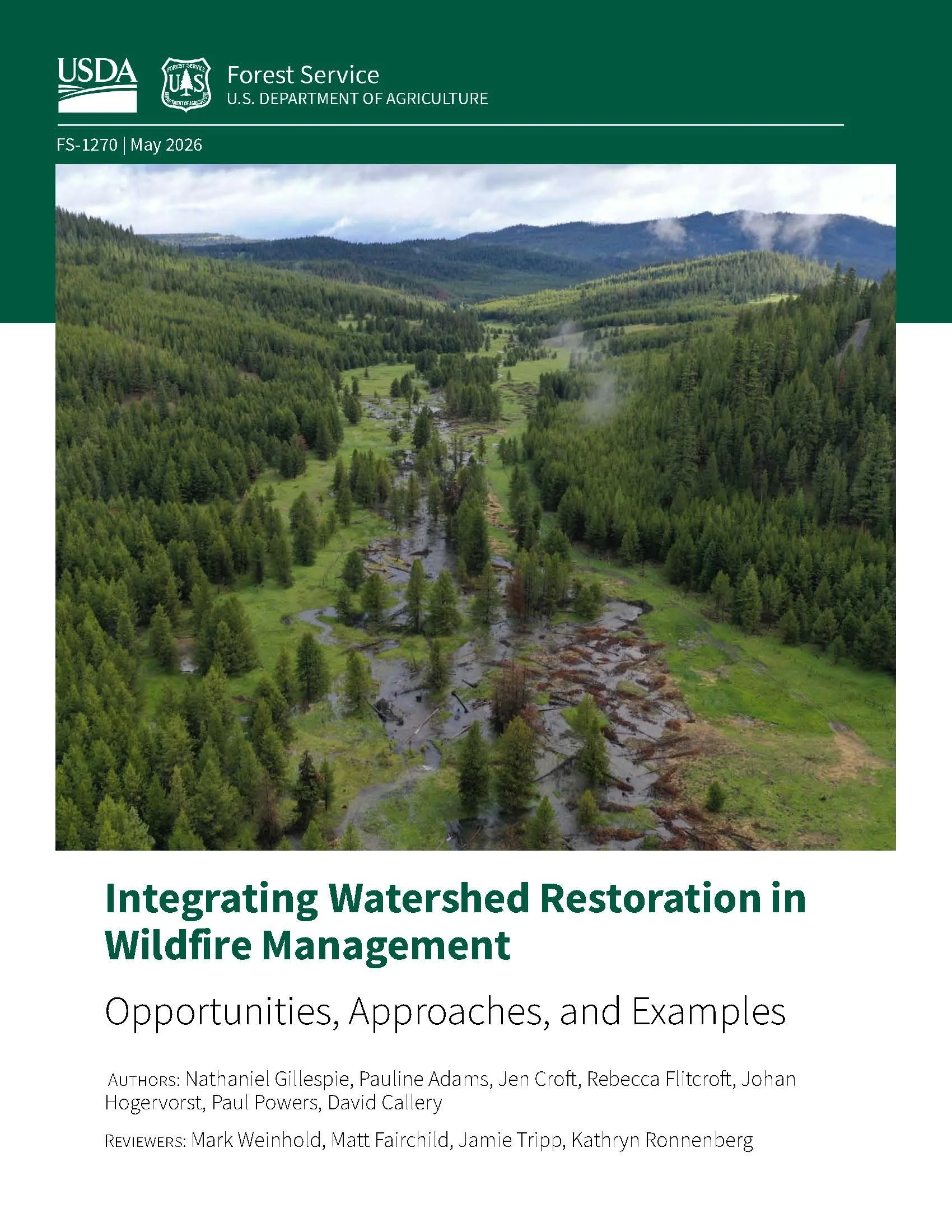
The Forest Service report, Integrating Watershed Restoration in Wildfire Management, makes the case that rewetting degraded stream corridors, meadows, and valley floors isn't just good for nature, it's a fire management strategy. When water tables rise and wetland vegetation returns, those areas become "wet fuel breaks" that wildfires struggle to cross.
The good news: this doesn't always require massive infrastructure. Some of the most effective techniques are surprisingly low-tech.
Beaver dam analogs (BDAs): Hand-built structures that mimic natural beaver dams, raising water tables and encouraging real beavers to move in and take over maintenance for free.
Large wood addition: Logs and slash from nearby forest thinning projects are placed in stream channels, slowing water flow and helping it spread across floodplains.
Beaver reintroduction: Relocating "nuisance" beavers from urban areas to national forests, where they naturally build and maintain wetland complexes at no ongoing cost.
Valley-bottom reset: For severely degraded sites, heavy equipment fills in downcut channels and spreads wood across entire valley floors to rehydrate them, typically costing $3,000–$15,000 per acre, far less than traditional engineering approaches.
Two birds, one stone
Waste wood from fire crews becomes the raw material
One of the report's most practical insights is that watershed restoration and hazardous fuels reduction can feed each other. When crews thin overgrown forests to reduce fire risk, they generate enormous quantities of slash and low-value timber. That material, instead of being piled and burned, can be placed directly into streams and meadows as restoration structures.
This cuts costs, reduces smoke from prescribed burns, and achieves two federal land management goals at once. Fire crews with chainsaw skills are, it turns out, well-suited to building instream log structures.
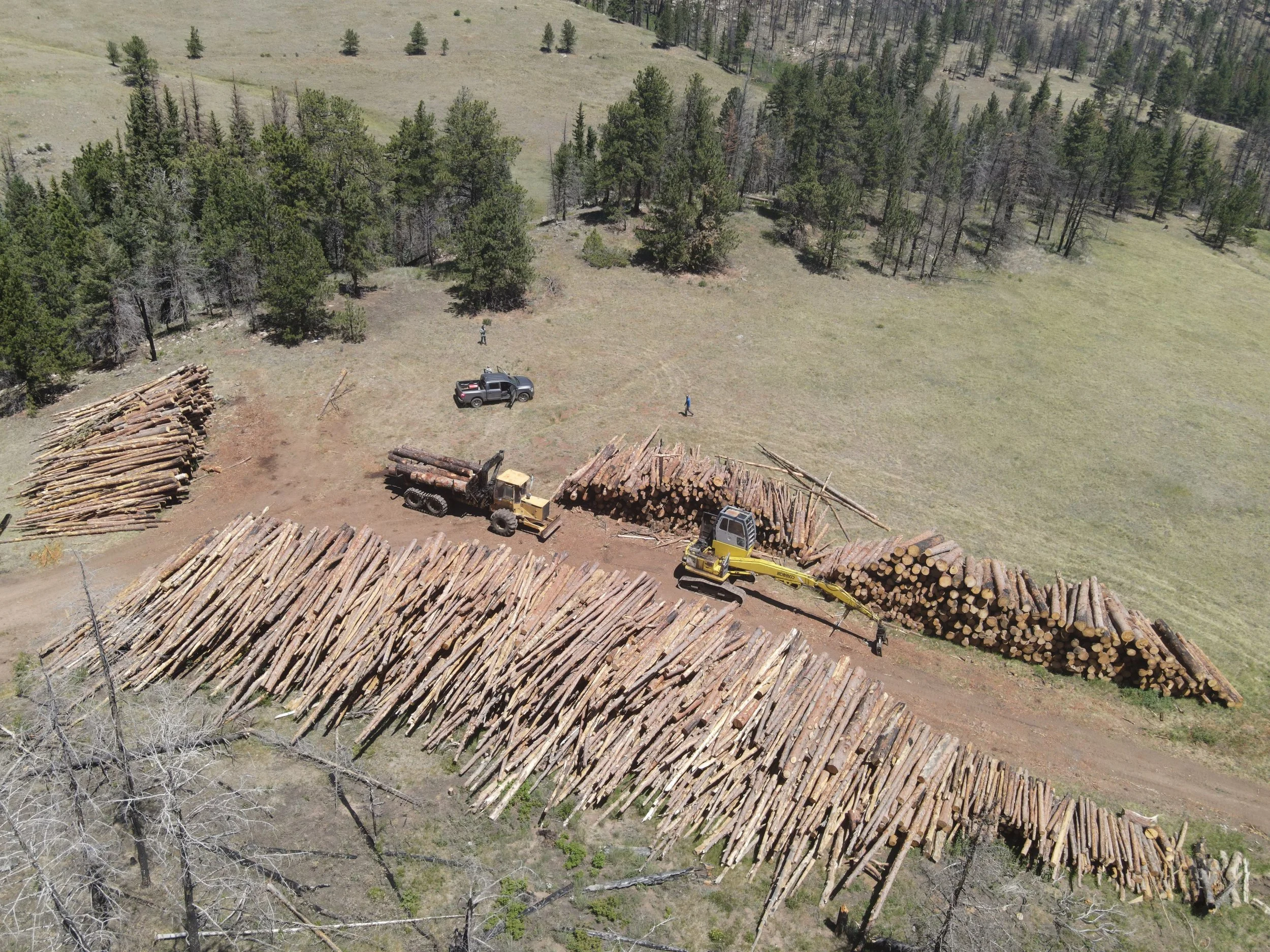
The Fish Creek Wildfire Mitigation Project provided wood for the South Fork stream restoration project led by the Coalition for the Poudre River Watershed following the Cameron Peak fire in Colorado. Benefits include productive use of timber and slash as well as reduced costs to transport timber to distant mills or purchase wood material. Courtesy photo by Larimer Conservation District.
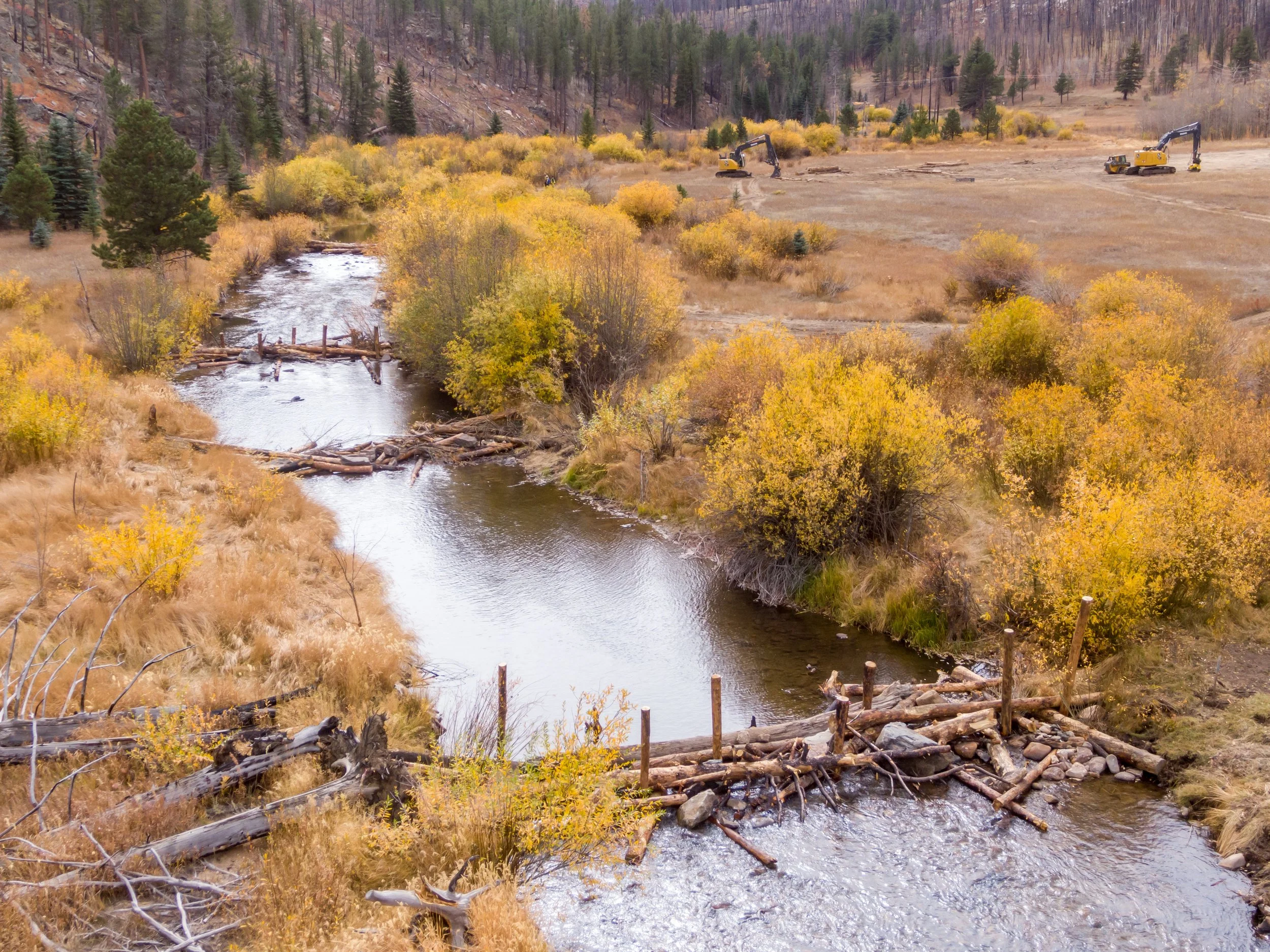
Wood from the Fish Creek Wildfire Mitigation Project was used just a few miles downstream for building engineered log jams on the South Fork of the Cache la Poudre River.
Who benefits
Not just the forest
The benefits extend well beyond wildfire. Restored wetlands improve drinking water quality for downstream cities, reduce flood damage, restore fish and wildlife habitat, create local jobs, and support Tribal co-stewardship of traditional lands. After a fire, these same features capture ash and sediment before they reach reservoirs, protecting the water supply for communities that may be many miles away.
The report was authored by Forest Service scientists and is intended for land managers, fire planners, and partners across federal, state, and Tribal agencies. But its core message is simple enough for anyone: a healthy, wet landscape is a safer one.