Wildfire Mitigation Work Coming to Crystal Lakes
Large-acre wildfire mitigation projects are once again hitting the ground in Crystal Lakes. As you walk through the community, you may start seeing blue markings on trees around Basecamp, Tiny Bob Road, and other areas of the community. This is indicative of an upcoming wildfire mitigation treatment as part of the Red Feather Lakes (RFL) Area Wildfire Defense Project, a partnership among the Coalition for the Poudre River Watershed (CPRW), Larimer County Office of Emergency Management, and the communities of Crystal Lakes, Poudre Canyon, Glacier View, and Cherokee Meadows.
The Science Behind It
Trees are targeted for removal according to canopy density, species, and age diversity. The goal is to reduce potential wildfire intensity should wildfire come through areas of Crystal Lakes. Canopy density reduction keeps fire from traveling through crowns, and conifers get thinned so that there is 10-30ft of spacing between individual trees or groups of trees. Tree species that are prioritized to remain include aspen, ponderosa pine, and limber pine. All three species are hardy, and fire adapted, and are declining in other habitats in Colorado. Aspens also need soil disturbance to grow, and thrive in full sun environments. For this reason, all conifers will be removed from aspen stands, except for old trees, which will help the aspen stands expand. On the other side of the equation, lodgepole pine trees grow in large, thick stands to protect themselves from the wind because they have shallow roots and blow over easily. This also means that when they catch fire, they burn to the ground and create high intensity fire behavior in the process. The only way to successfully mitigate wildfire risk within them is to create a mix of lodgepole stands interspersed with large meadows and openings. This brings intense fire back to the ground, breaks up homogeneity, and introduces age and species diversity.
What to Look For
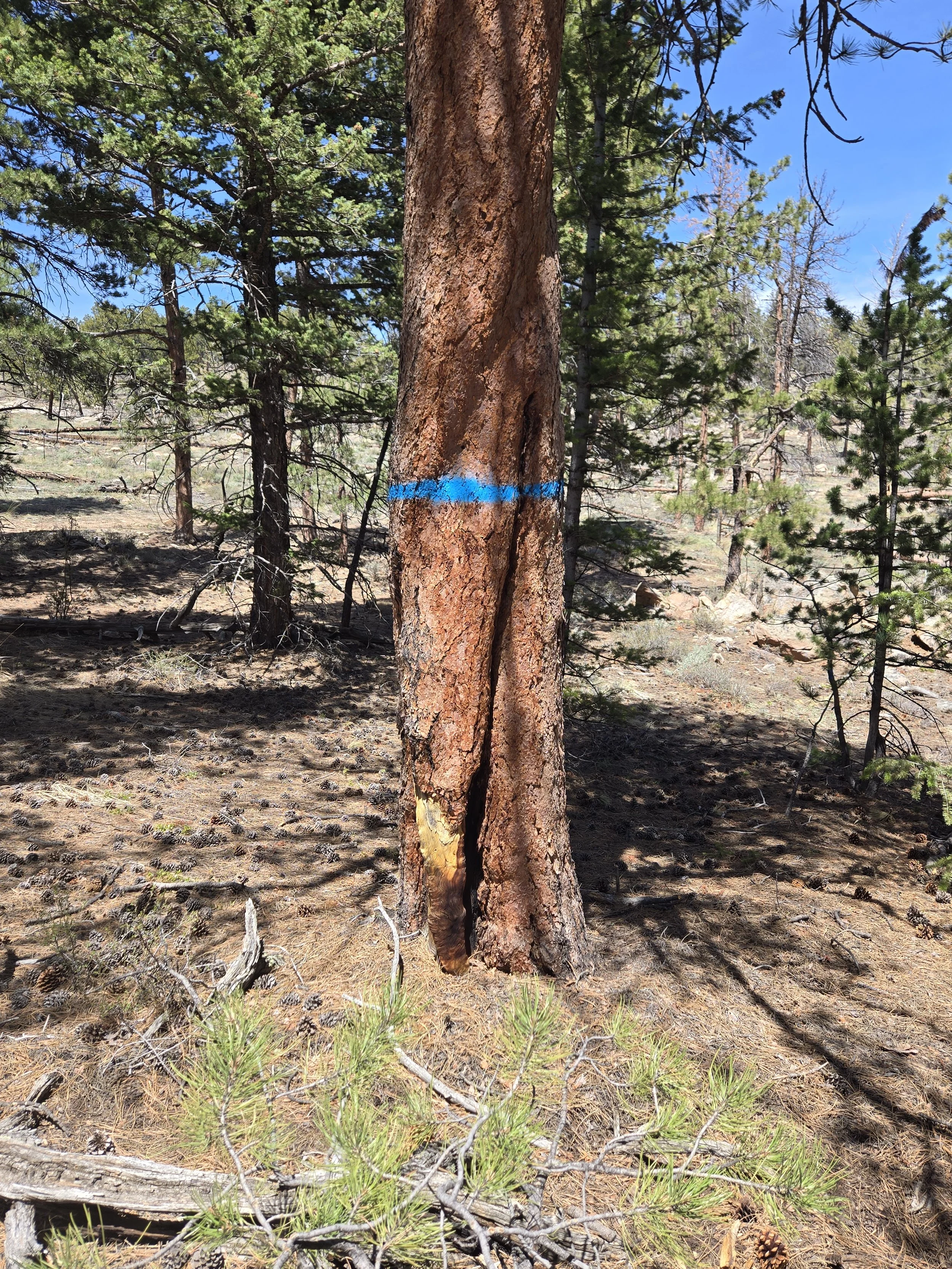
Blue flagging or paint means keep!
Trees that will be retained after the treatment will be marked with blue paint or flagging. Blue markings accompanied with pink or green tape that encircle a stand mean that everything within the circle will be left alone. Orange paint or pink flagging mark treatment boundaries. All live aspen trees will stay but won’t be marked in blue. All other unmarked trees will be removed during the treatment. If you find pink flagging attached to a washer and nail driven into the ground, please don’t touch it, this indicates a monitoring plot that will be used to track fuel density and predict fire behavior change once the treatment is completed.
What to Expect
Treatment areas will look different than you are used to once the treatment is complete. At Basecamp, aspens will grow into many of the areas that are currently unhealthy lodgepole pine stands intended for removal. Treatments will have reduced forest density with a greater proportion of open meadows that are perfect for wildlife passage and habitat, and great at reducing fire intensity. The treatments will look a little torn up during the first year after completion, but healthy forests rely upon disturbances like what is about to be created. By the time year two rolls around, grass, wildflowers, aspens, and wildlife will be coming back fast. In a couple of years, the only indications that treatment occurred will be stumps. The forest itself will be a healthier, more gorgeous wildfire-adapted version of itself.
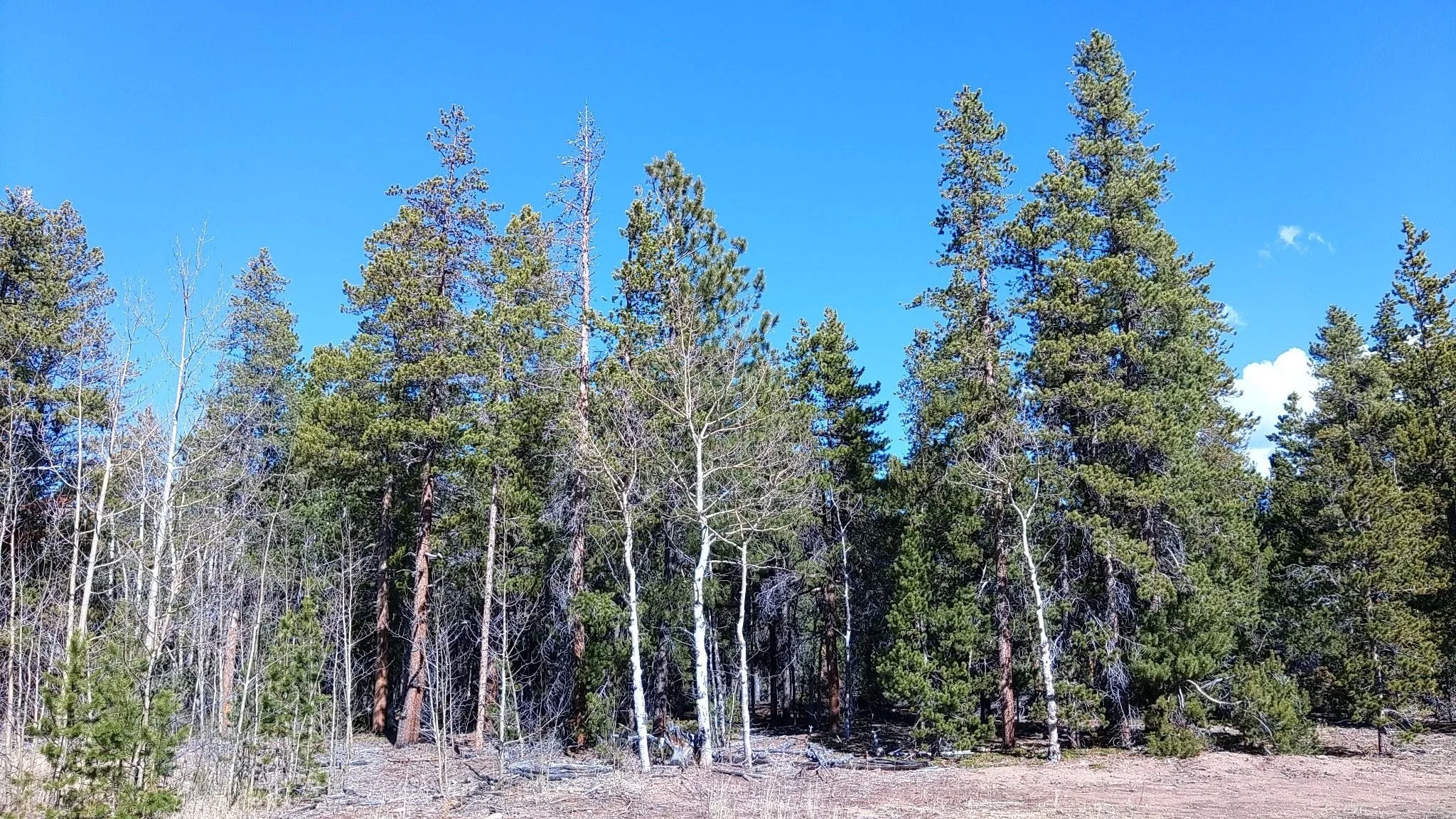
Lodgepole Pine stands before treatment at Reynolds Ranch in Boulder County.
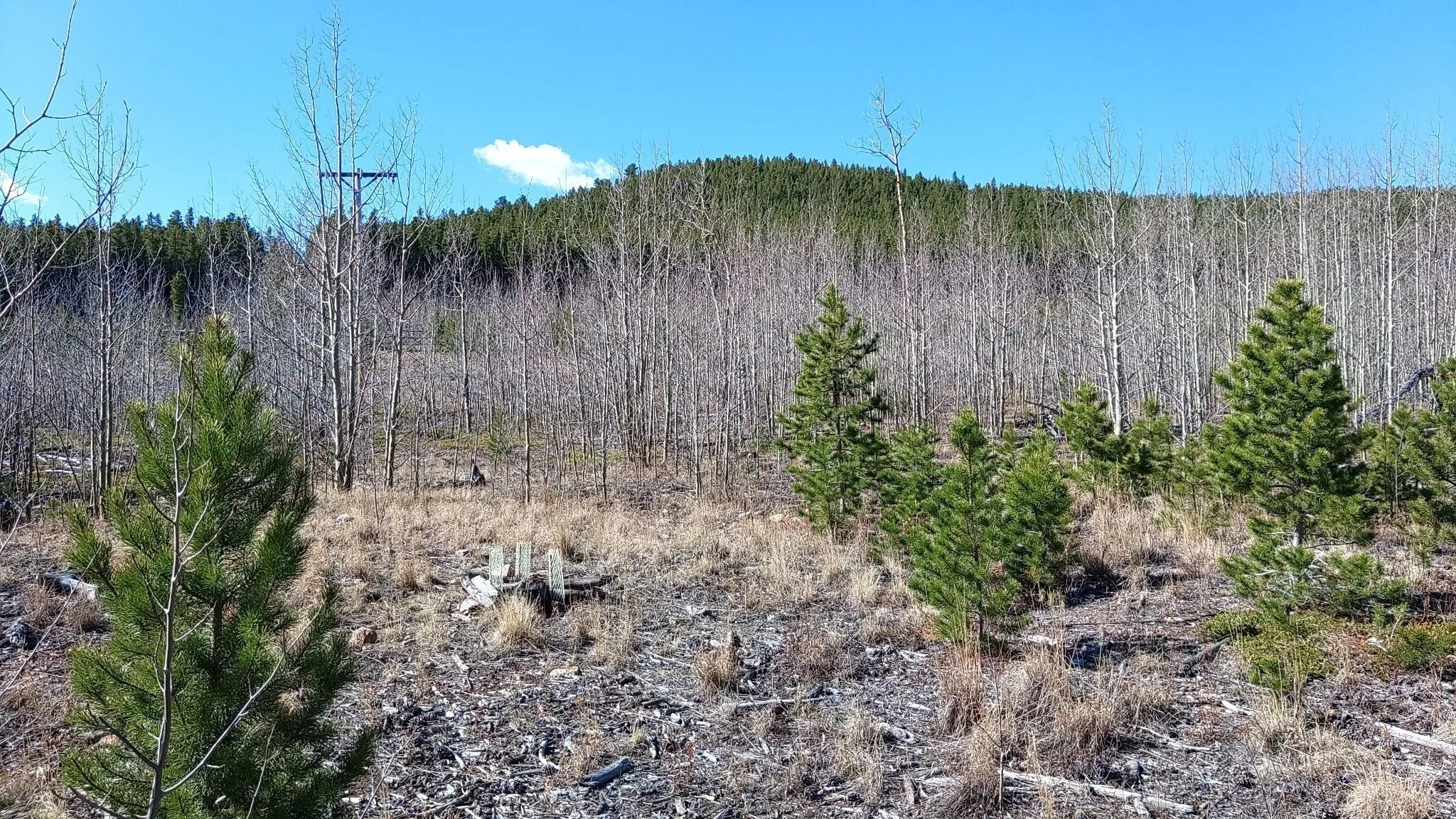
10-15 years after Lodgepole Pine treatment. Aspens are healthy and conifer regeneration is growing back outside the stand.
Questions?
Find out more at https://www.poudrewatershed.org/redfeathercwdg
Contact Megan Kocina, CPRW Forestry Coordinator, at mkocina@poudrewatershed.org
Sign up for the monthly RFL Area Wildfire Defense Project Newsletter at https://mailchi.mp/2941a7af5144/red-feather-cwdg