Laramie River Channel Resiliency Project
Cameron Peak Post-Fire Restoration
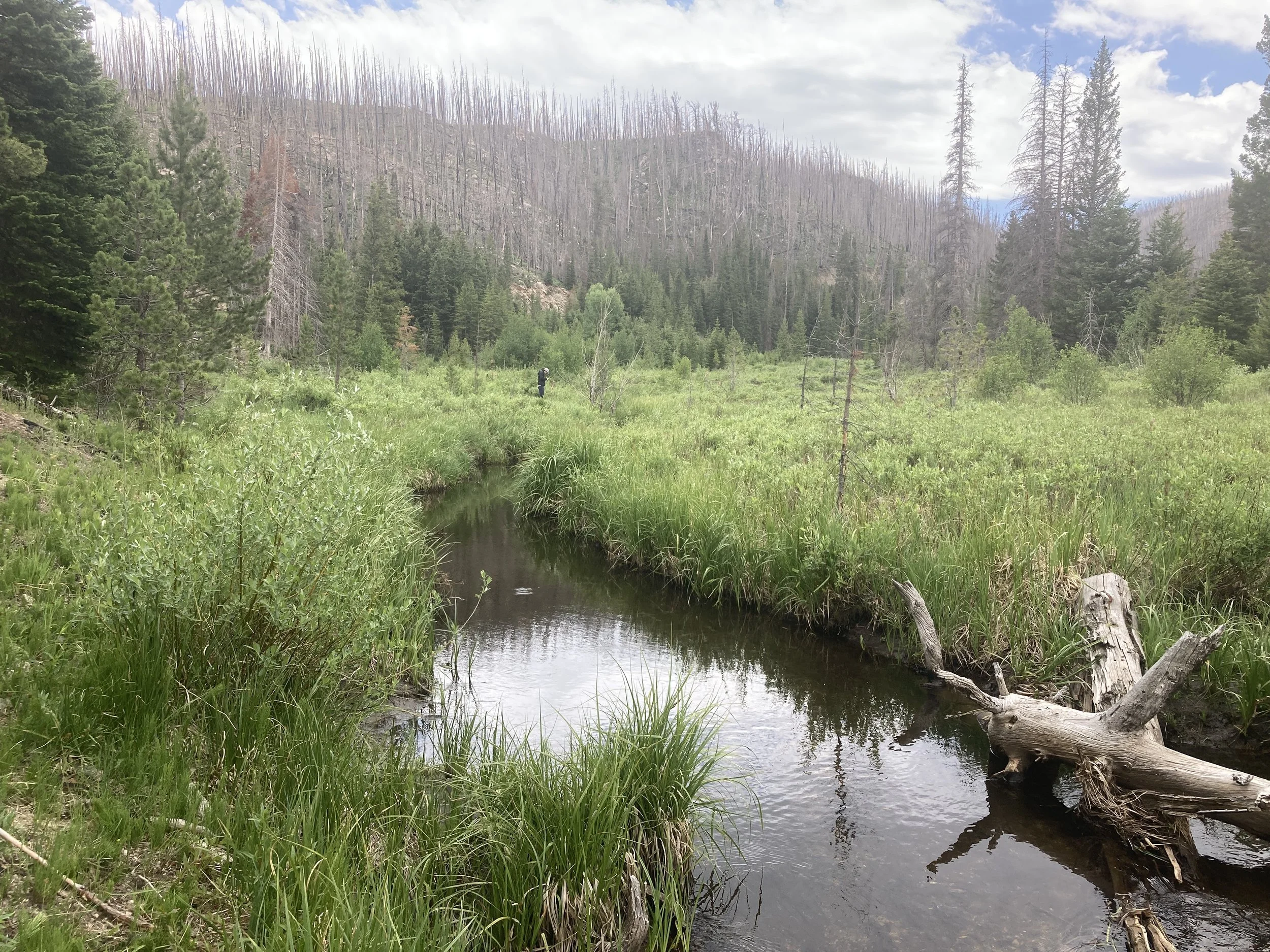
Severe wildfire within the Laramie River watershed has resulted in water quality and stream degradation throughout this project reach.
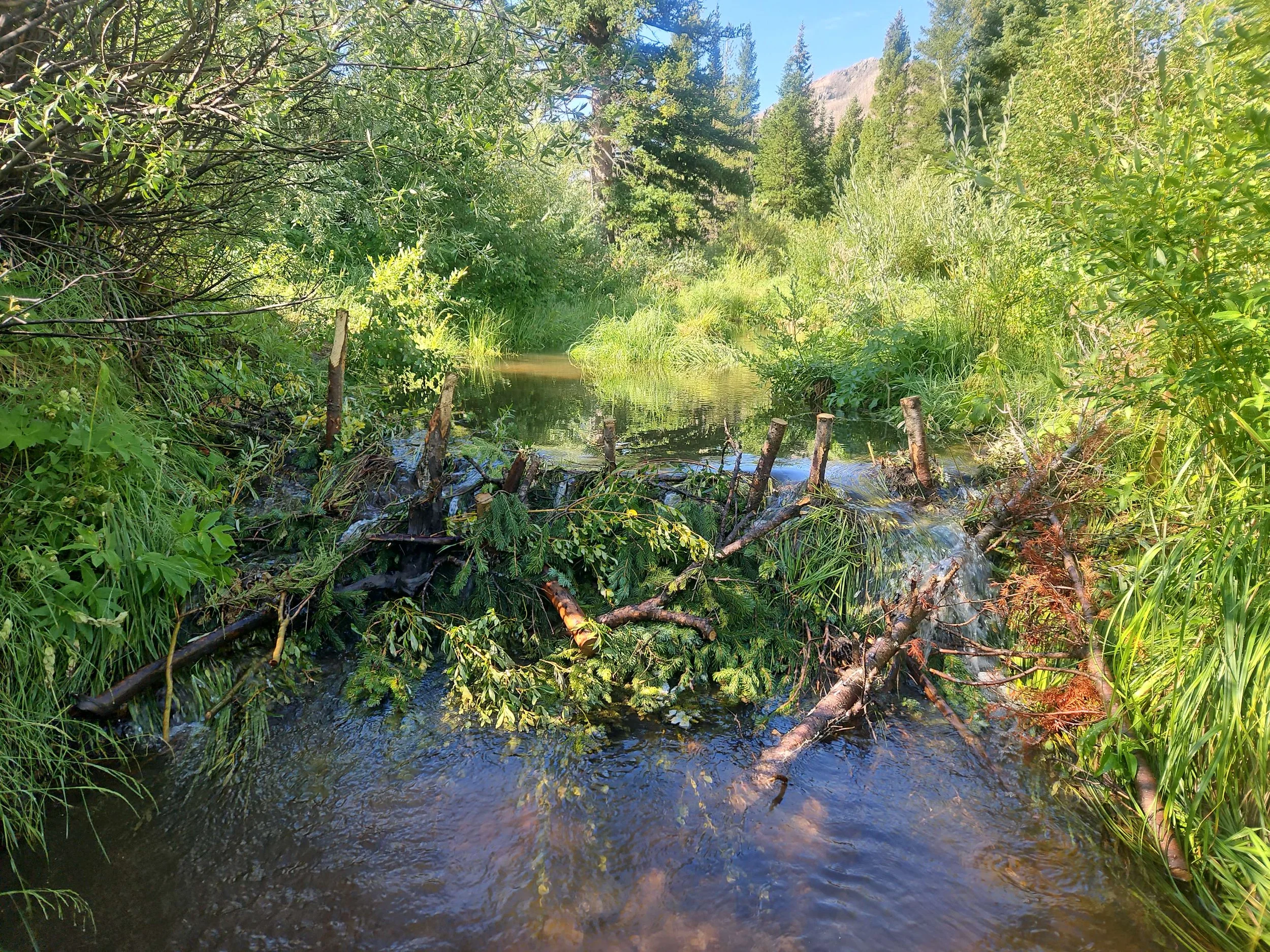
A beaver dam analog (BDA) on the Laramie River.
Project Overview
The purpose of this project is to improve water quality and riverscape resiliency following impacts from the 2020 Cameron Peak Fire along the Laramie River, a waterway that is partially diverted to the Cache la Poudre River via a transmountain tunnel.
The proposed project is needed because of severe burn within the Laramie River watershed resulting in water quality and stream degradation throughout the reach. This watershed has not received any in-stream treatments following the Cameron Peak Fire. Historically, this section of the Laramie River was inhabited by beaver and currently has some non-persistent beaver dams in the project reach. Since the Cameron Peak Fire, beaver have tried and struggled to reinhabit this area. Since 2013, there has been some beaver activity (1 – 3 dams) that have blown out from year to year. Because the project reach has ephemeral beaver presence, providing beaver with a lift in the form of wood structures could allow them to build a more robust population over time and contribute to water quality objectives.
Post-Fire Treatments
CPRW proposes to use low-tech process-based restoration (LTPBR) techniques and structures to improve water quality and riverscape resiliency following the 2020 Cameron Peak Fire along the proposed stretch of the Laramie River. Low-tech means that features will be installed with hand crews only (no large machinery) within the project area. Given the presence of ephemeral beaver activity in the project area, the design is flexible to avoid disturbing or displacing beaver and assumes at least a 150 ft buffer around current and future active beaver. An ecologist will be present during staking to look for signs of recent beaver activity. A contractor will construct all low-tech process-based mitigation features. CPRW proposes the following features:
Post Assisted Log Structure (PALS) – PALS would be placed primarily at portions of the main channel where overbank flows can be achieved or additional roughness would contribute to slowing water in an area that may currently have high velocity. On-site burnt logs/branches (< 15” dbh or less, < 33% of available trees) and live willow cuttings would be pinned together with untreated timber posts (2-4” diameter) driven into the streambed to initiate and simulate natural wood accumulation. PALS provide opportunities for sediment storage behind the structures while promoting overbank flow, additional wood recruitment, aquatic habitat complexity, and riparian health. PALS would be constructed by hand crews with a pneumatic post driver and chainsaws. An ATV will be needed to move the post driver set up to most PALS locations. Posts will not be dragged.
Beaver Dam Analogs (BDA) - BDAs are channel-spanning, semi-permeable structures with a uniform crest elevation constructed using live willow cuttings/branchy material and sod to mimic natural beaver dams. Live willow cuttings, burnt logs/branches, and sediment plugs will be gathered on-site and matted together in layers to create a wide berm. Posts made of untreated timber (2-4” diameter) will be driven through the structure after reaching the final crest height in order to provide additional stability. BDAs mimic the form and function of natural beaver dams by creating backwater area behind the structures which benefits habitat and floodplain connectivity. Note that this site has historic beaver activity, and some beaver activity was observed following the 2020 Cameron Peak Fire. Due to the amount of incision occurring and size of the Laramie River, a substantial amount of sod is needed to increase the chance of BDA success. Additionally, the Laramie River is unique in that over the short term, it may have excess sediment from the fire, but over the long term is generally sediment starved due to Chamber’s Lake upstream. Under these conditions, less porous structures using sediment plugs are more effective at capturing the sediment that is available during fire recovery. Willows gathered to use in the construction of these features will not exceed 20% of the total number of stems on an individual plant.
Log Structures – On-site burnt large woody material (8-15” diameter, <33% of available trees) will be placed and interlocked in the channel to increase roughness, reduce velocities, and enhance deposition. These features will reduce flow velocities by acting as speed bumps and increase opportunities for sediment deposition and storage. Log structures will also return flow to the overbanks and provide additional structure for beavers to build on, reducing incision and rehabilitating the floodplain.
Install Willow Stakes – Establishing woody riparian vegetation such as willows increase the capacity for sediment storage and nutrient uptake and enhances habitat complexity in riparian and aquatic ecosystems. Native willows would be harvested onsite and installed at locations with shallow water tables and near constructed features that would support establishment. Willows gathered will not exceed 20% of the total number of stems on an individual plant.
Project Goals
Improve water quality and ecological functioning by providing opportunities for sediment storage, nutrient uptake, and enhanced aquatic and riparian habitats.
Improve stream processes in the Laramie River that align with downstream Wild and Scenic recreation, aesthetic, fisheries, and aquatic habitat values in the Cache la Poudre River.
Use process-based restoration techniques to meet the project objectives.
Project Collaborators
US Forest Service
Ayres Associates (Design & Engineering)
AloTerra Restoration Services (Construction)
Colorado State University (Research & Monitoring)
Funders
Colorado Water Conservation Board (CWCB)
National Forest Foundation (NFF)
Project Timeline
2026 - Phase 1: Initial installation of in-stream features and willow staking
2027-2031 - Phase 2: Install additional in-stream features and willow staking on an as-needed basis.