Sheep Creek at Zimmerman Dam
Cameron Peak Post-Fire Restoration
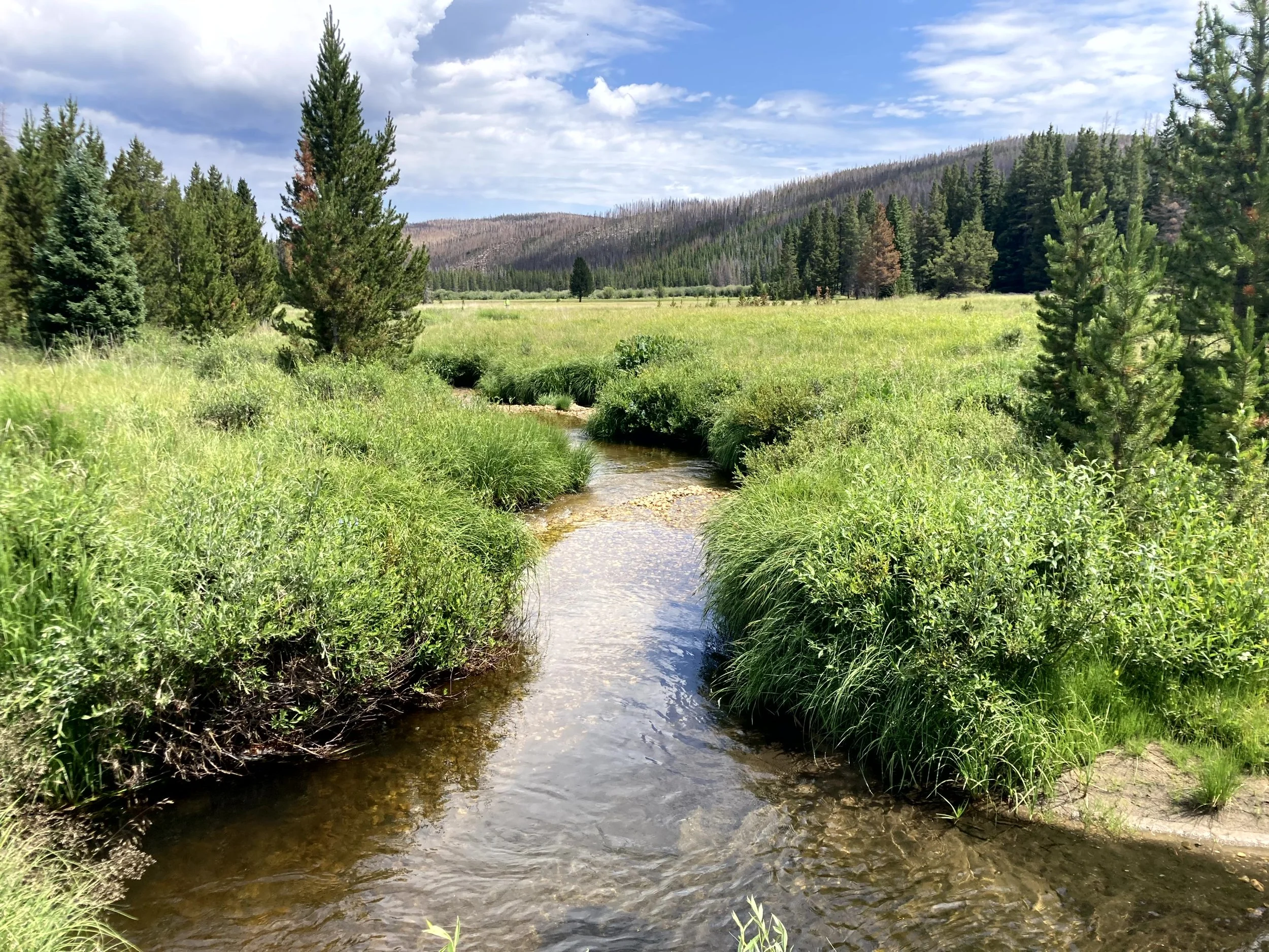
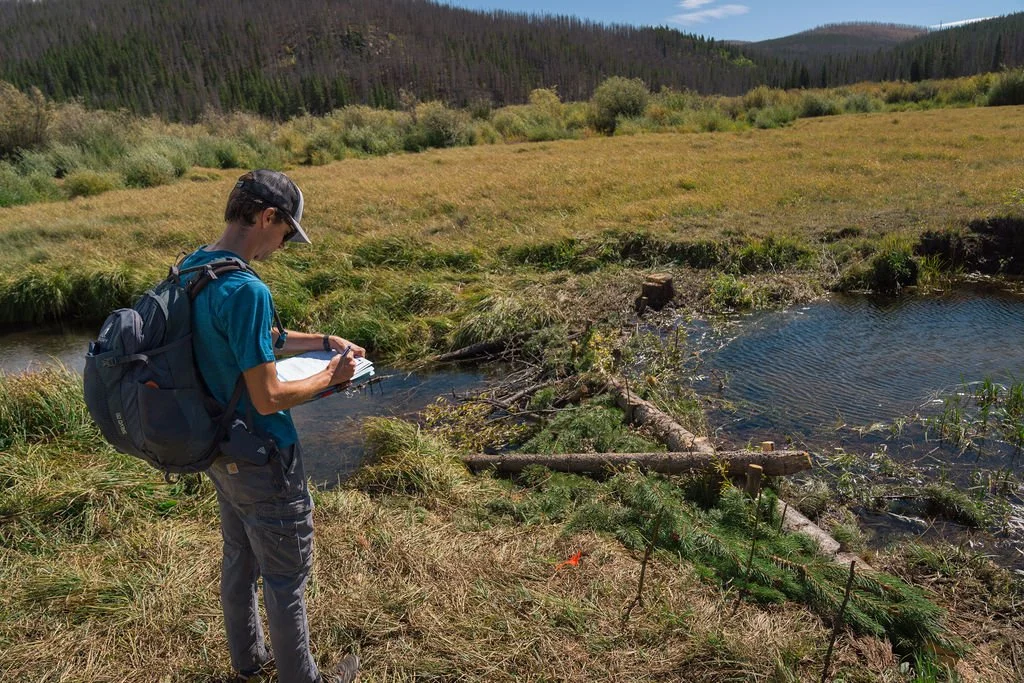
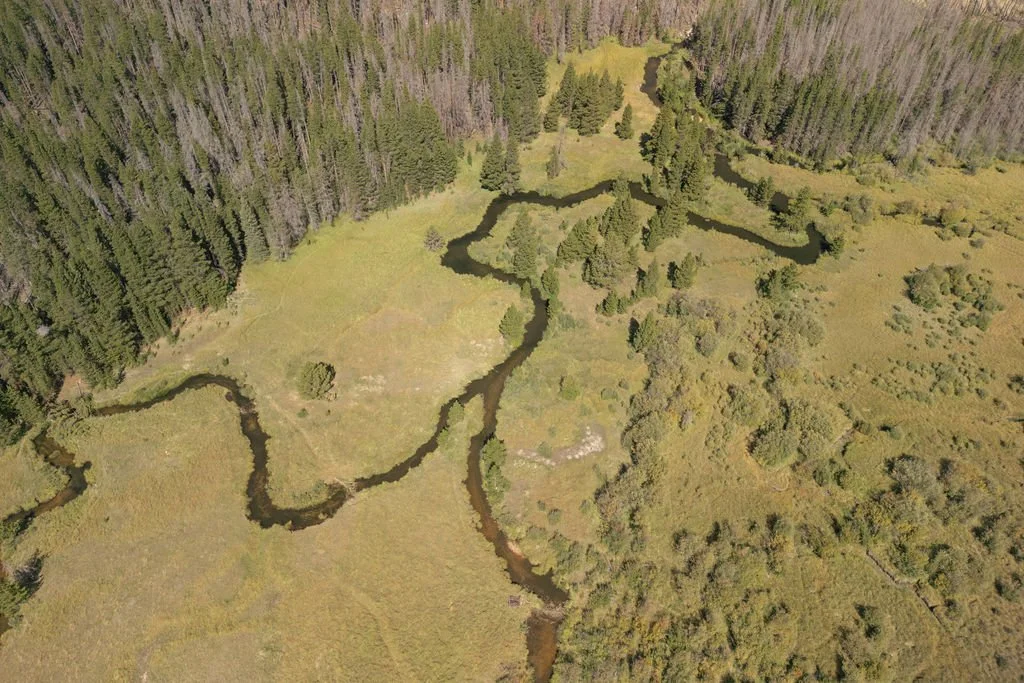
Sheep Creek is experiencing incision and increased floodplain discontinuity that impact riparian health and water quality.
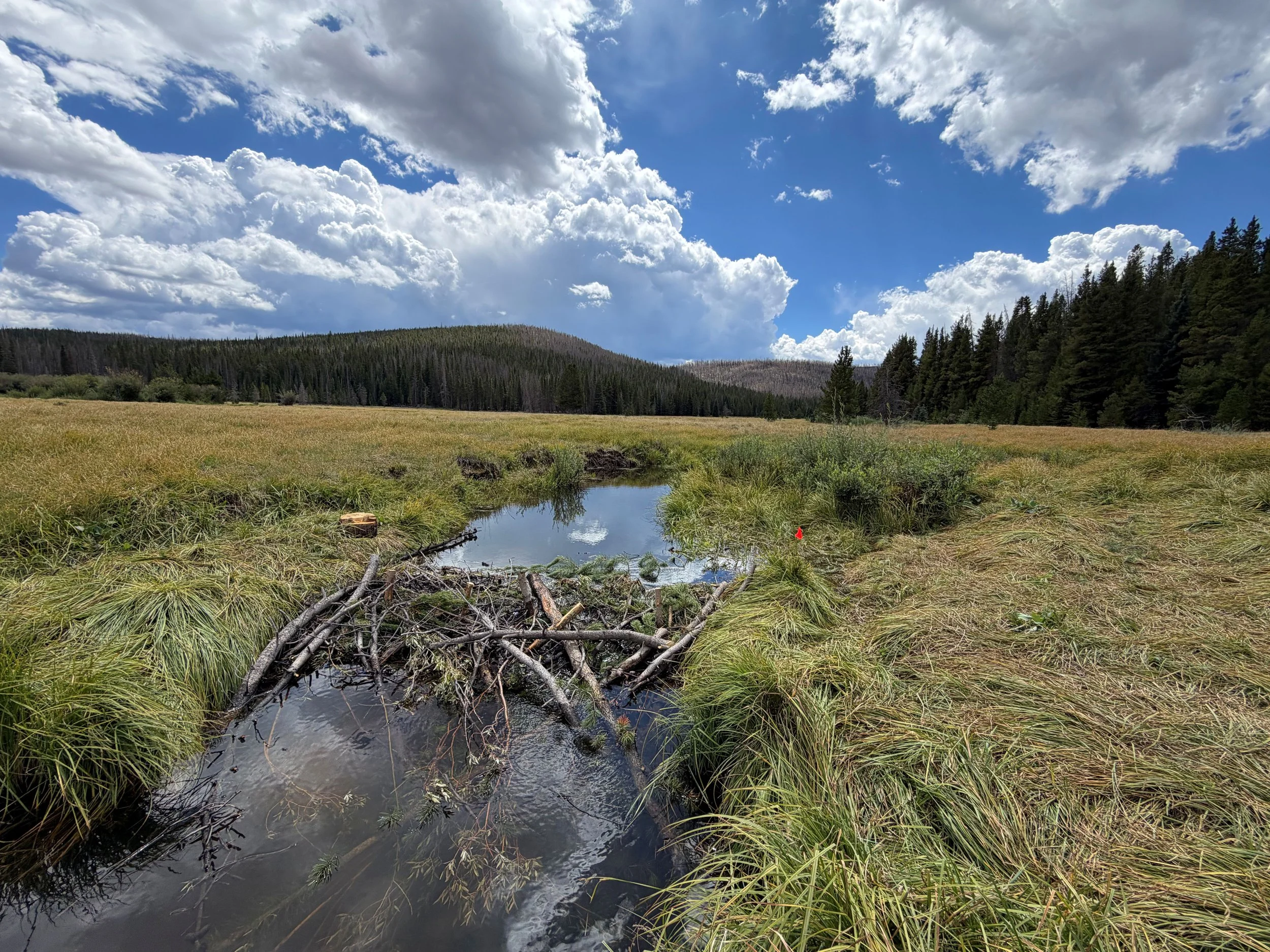
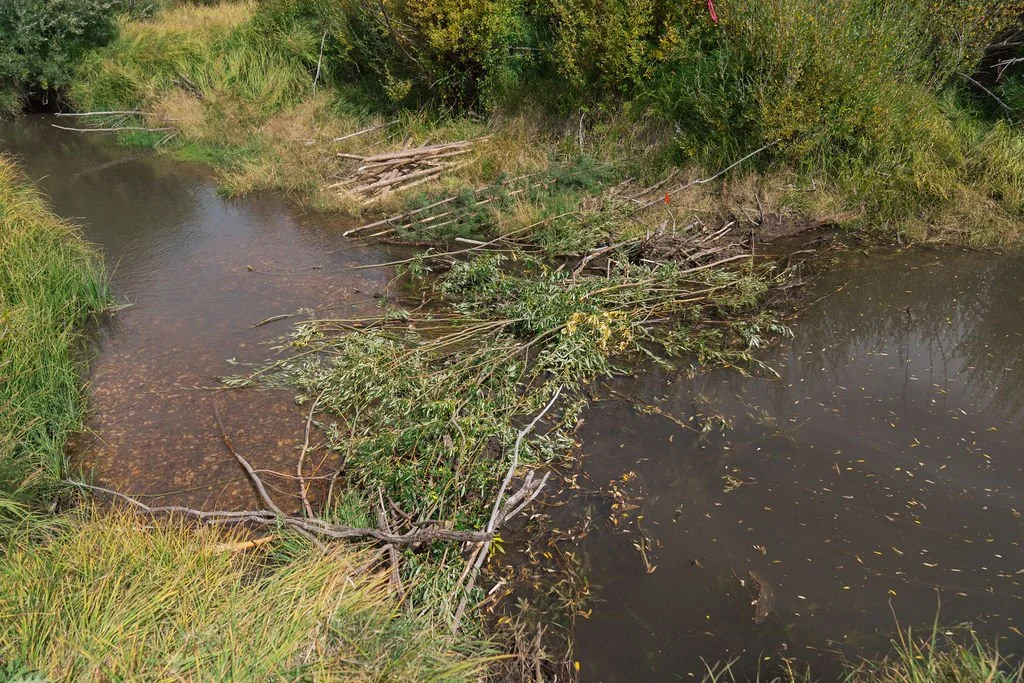
BDAs mimic the form and function of natural beaver dams by creating a large backwater area behind the structure, which benefits habitat and floodplain connectivity.
Project Overview
The purpose of this project is to improve water quality and riverscape resilience following impacts from the 2020 Cameron Peak Fire on Sheep Creek, a major tributary to the Cache la Poudre River.
Approximately 82% of the watershed contributing to this site was burned during the Cameron Peak Fire (see burn severity map below). CPRW and Ayres completed a prioritization matrix in which this site ranked fourth out of over two dozen sites across the Cameron Peak Fire burn scar. Both the East and West Fork of Sheep Creek, which merge at the proposed project location, are experiencing incision and increased floodplain discontinuity that impact riparian health and water quality along Sheep Creek and in the Cache la Poudre River. Approximately 22% of the contributing watershed is located in Wilderness, in which no post-fire treatment has been performed. Additionally, Wilderness designations exist downstream of the proposed mitigation to the Cache la Poudre River, making this a high priority site for mitigation. A hydrologic analysis suggested that the post-fire flows would more than quadruple compared to pre-fire flows the 10-year and less frequent events due to post-fire hydrology alone. Increased runoff has resulted in additional sediment and nutrient inputs from adjacent hillslopes to stream systems, degrading water quality and aquatic habitat (observed fines throughout the reach). Several beaver dams observed in 2021 and earlier were blown out in 2023, which has contributed to additional floodplain discontinuity. CPW has expressed interest in using this location for future native greenback cutthroat trout reintroduction (not currently planned), and has indicated that the work performed would benefit this effort. The site is located near the Zimmerman Trail.
Sheep Creek at Zimmerman Dam - project design (click to enlarge)
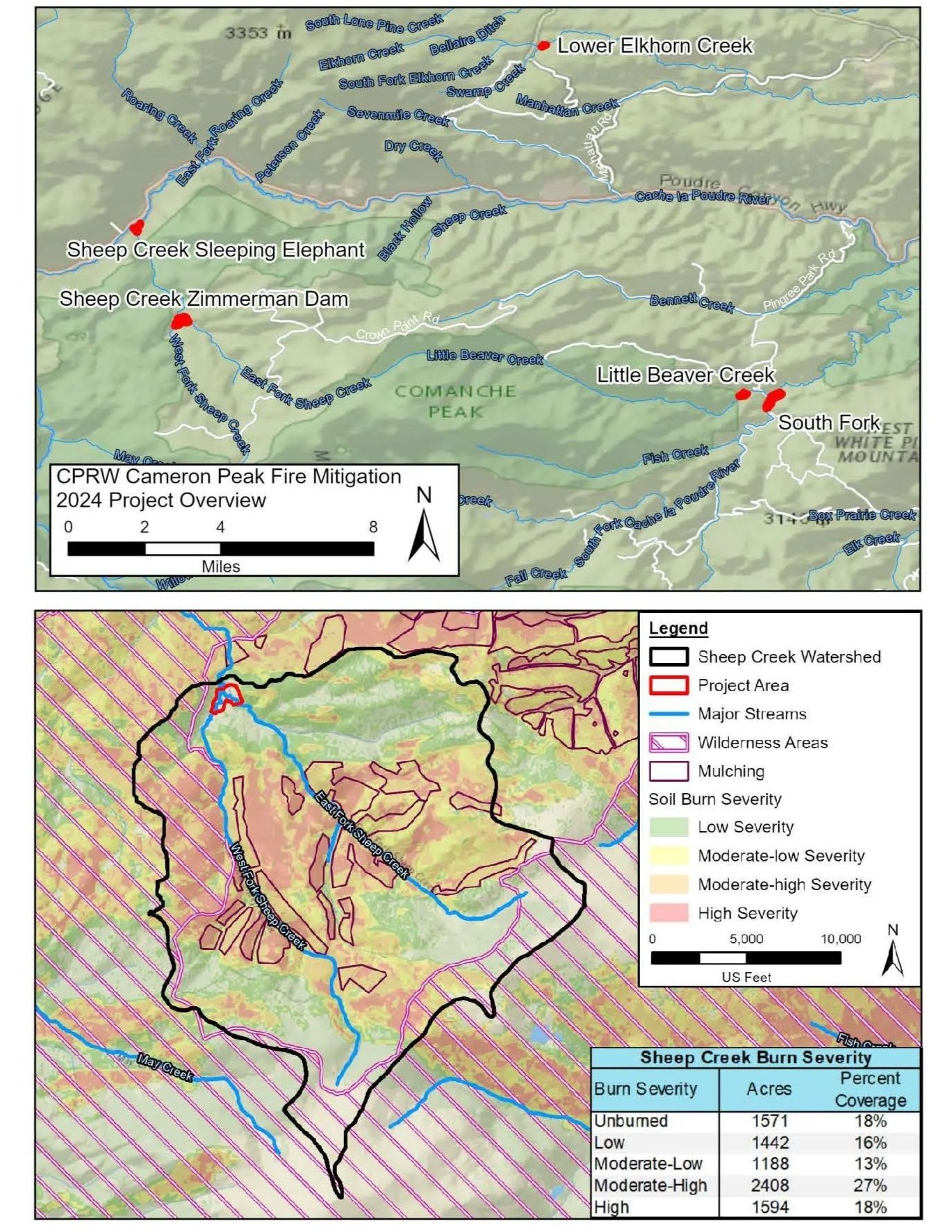
CPRW Post-Fire stream restoration projects & Sheep Creek burn severity map (click to enlarge)
Post-Fire Treatments
CPRW is using low-tech process-based restoration techniques and structures to improve water quality and riverscape resiliency at this site. The location was chosen because severe and significant portions of burnt conditions contribute to the site, as well as observed poor riparian health, ash and fine sediment in the channel, and blown out beaver dams, which cause degradation to the Cache la Poudre River. In addition, access is limited. CPRW proposes:
Post Assisted Log Structure (PALS) – PALS would be placed primarily at incised portions of the main channel or at existing blown out beaver dams. On-site burnt logs and branches (8-15” diameter) would be pinned together with posts constructed from on-site logs (3-6” diameter) driven into the streambed to initiate and simulate natural wood accumulation. PALS provide opportunities for sediment storage behind the structures while promoting overbank flow, additional wood recruitment, aquatic habitat complexity, and riparian health. If posts cannot be driven, then other forms of ballasting (mass ballasting; anchoring into existing vegetation, rock, or topography; or tying with biodegradable rope) will be completed.
Install Willow Stakes – Establishing woody riparian vegetation such as willows increase the capacity for sediment storage and nutrient uptake and enhances habitat complexity in riparian and aquatic ecosystems. Native willows would be harvested from the adjacent wetland area along the East Fork Sheep Creek (on USFS land) and installed at locations with shallow water tables and near constructed features that would support establishment.
Roughness Features - On-site burnt logs would be placed in lower overbank areas to create roughness and opportunities for sediment storage and floodplain complexity. These features will be placed at locations that are likely to experience overbank flow such as near PALS or log features or near the inside of a sharp bend.
Log Structures - On-site burnt large woody material (8-15” diameter) will be placed and interlocked in the channel to increase roughness, reduce velocities, and enhance deposition. These features will reduce flow velocities by acting as speed bumps and increase opportunities for sediment deposition and storage. Log structures will also return flow to the overbanks, reducing incision and rehabilitating the floodplain.
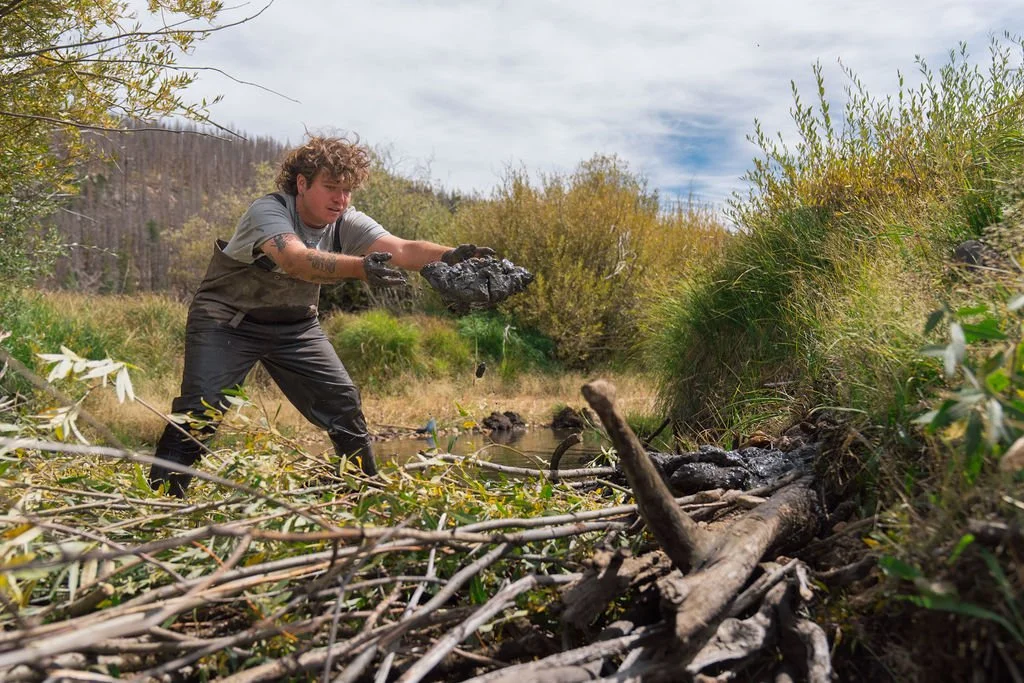
Beaver Dam Analogs (BDA) - BDAs are channel-spanning, semi-permeable structures with a uniform crest elevation constructed using woody debris and fill material to form a pond and mimic natural beaver dams. Woody material and sediment plugs will be gathered on-site and matted together in layers to create a wide berm. Posts made of on-site burnt logs (3-6” diameter) will be driven through the structure after reaching the final crest height in order to provide additional stability. BDAs mimic the form and function of natural beaver dams by creating a large backwater area behind the structure, which benefits habitat and floodplain connectivity. Note that pervasive beaver dams existed throughout the East Fork Sheep Creek prior to the Cameron Peak Fire and no beaver activity was observed in 2023.
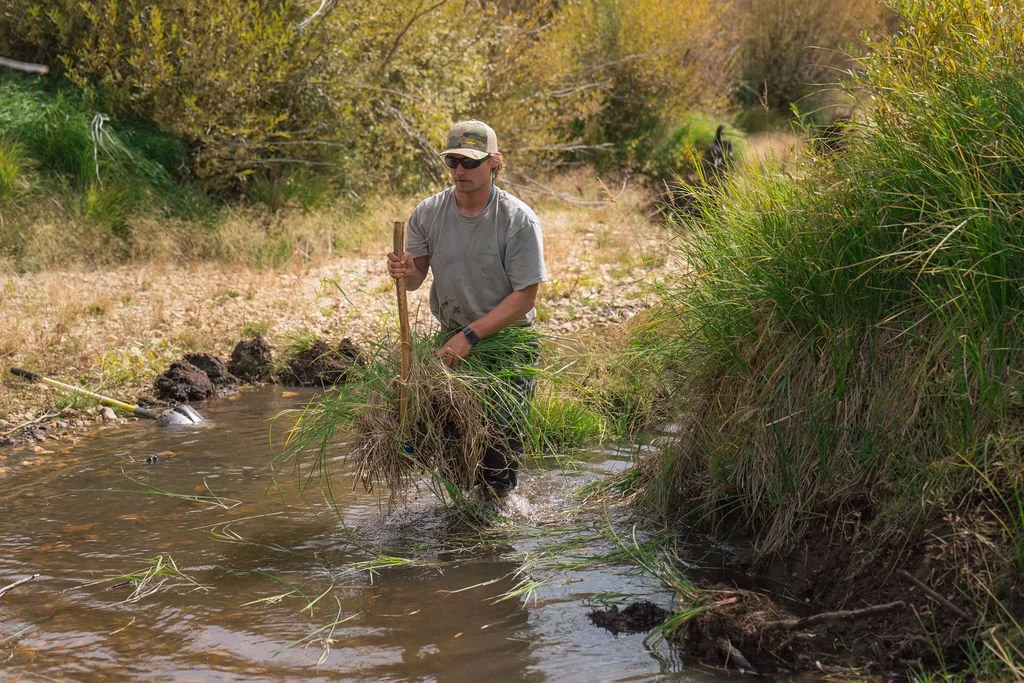
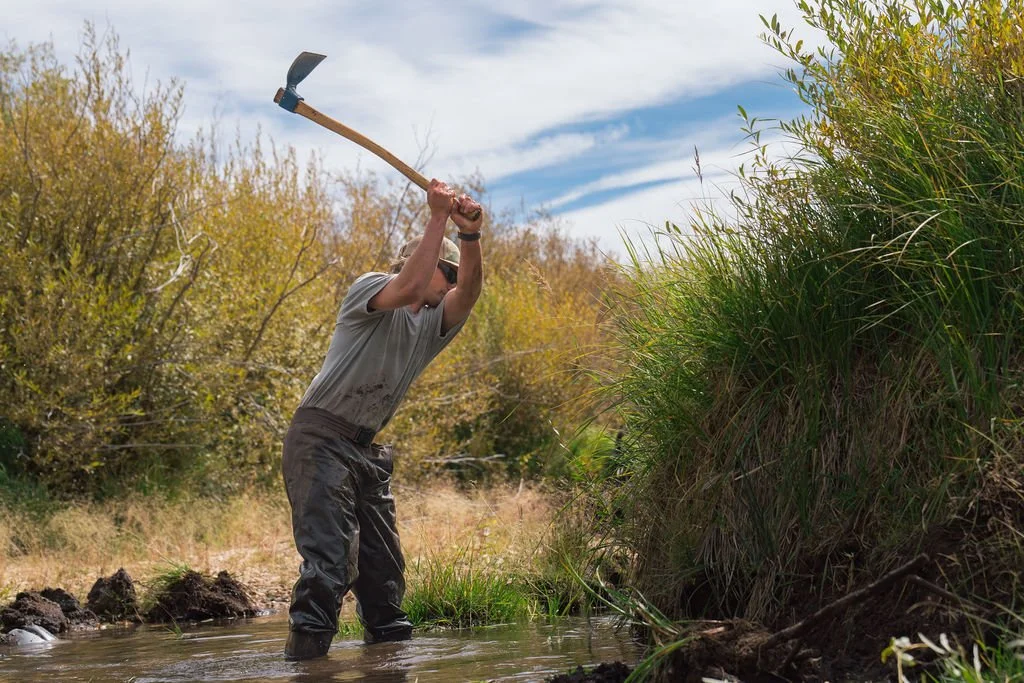
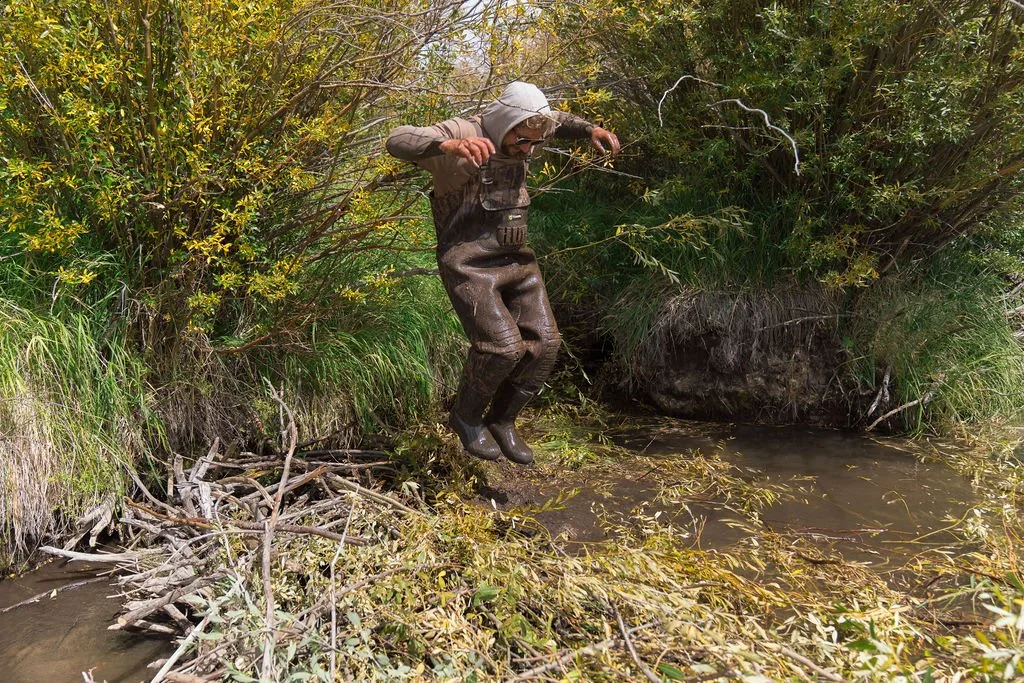
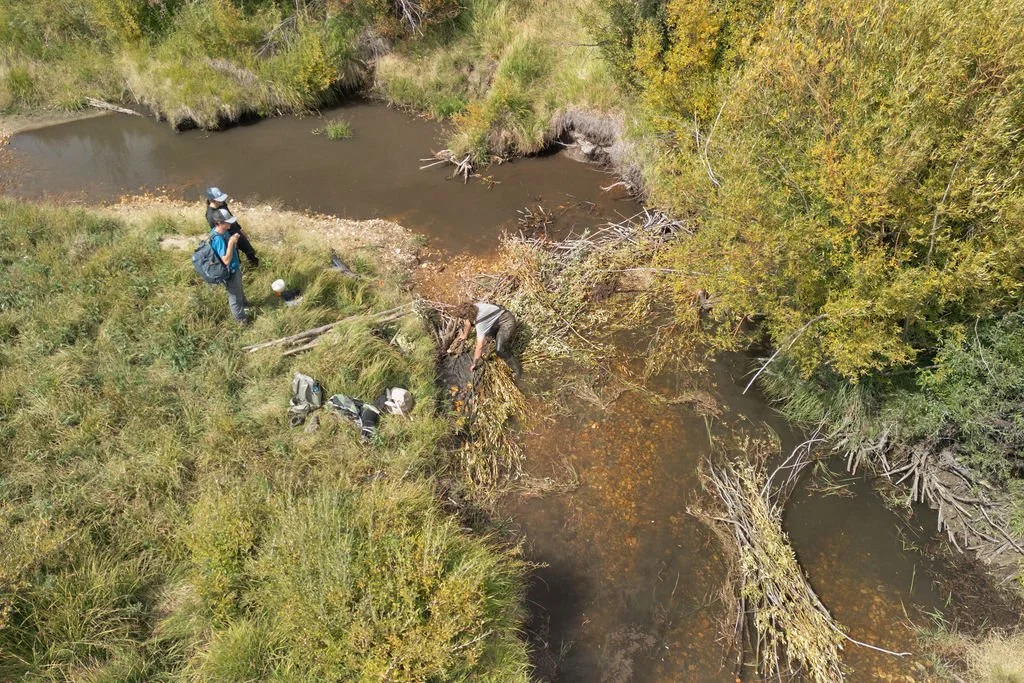
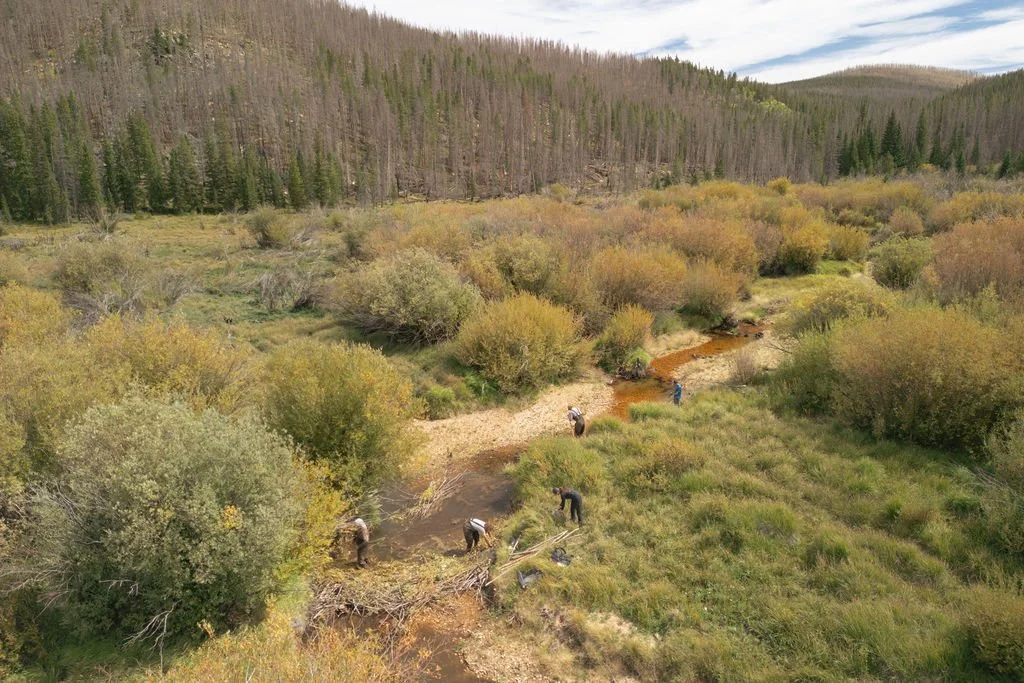
Photos above by Aaron Lavanchy
Project Goals
Improve water quality and ecological functioning by providing opportunities for sediment storage, nutrient uptake, and enhanced aquatic and riparian habitats.
Improve stream processes in Sheep Creek that align with downstream Wild and Scenic recreation, aesthetic, fisheries, and aquatic habitat values in the Cache la Poudre River.
Use process-based restoration techniques to meet the project objectives.
Project Collaborators
US Forest Service
Ayres Associates (Design & Engineering)
Aloterra Restoration Services (Construction)
Colorado State University (Research & Monitoring)
Funders
NoCo Foundation
Colorado Water Conservation Board (CWCB)
Project Timeline
Summer/Fall 2026: Construction